
Web Content Accessibility Guidelines – WCAG
web content accessibility guidelines - wcag-swift elearning servicesWeb Content Accessibility Guidelines (WCAG) is a series of Web accessibility Guidelines developed by the World Wide Web Consortium (W3C) which is widely agreed as a standard for digital accessibility compliance.

WCAG guidelines are classified into three levels in accordance to meet the needs of different groups with different situations. The levels are A, AA, and AAA where A (lowest), AA (medium range), and AAA (highest). Majority of organizations set their criteria at level AA.

In June 2018, W3C released WCAG 2.1 which is its first major update to WCAG requirements. This release has 17 new criteria refining WCAG coverage for cognitive disabilities, low vision disabilities, and mobile accessibility.

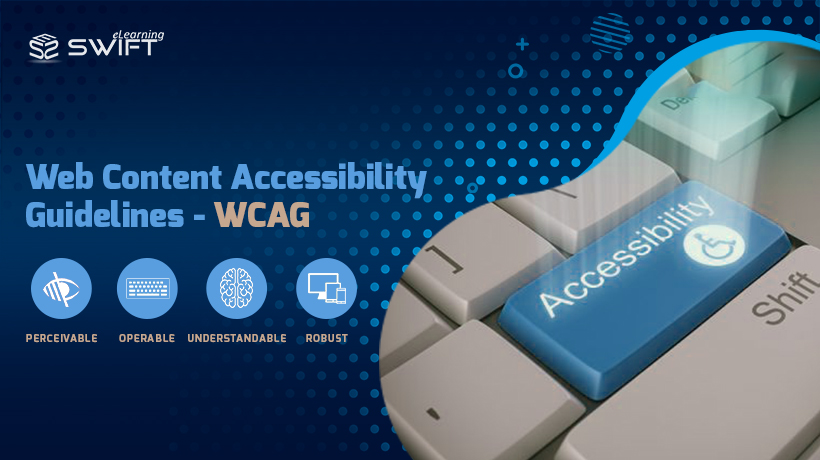
The four main principles organised under the Web Content Accessibility Guidelines (WCAG) 2.0 and 2.1 is “P.O.U.R.”: Perceivable, Operable, Understandable, and Robust.

The accessibility standards like Section 508, AODA, CVAA, and the Australian DDA are based on WCAG 2.0 Level A and AA. By adopting WCAG 2.1 Level A and AA, the EU Web Accessibility Directive has taken one step ahead.

It is recommended to comply with WCAG standards such as WCAG 2.1 level A and AA compliance to avoid legal risk.

Steps to Comply with WCAG

Here are the steps to make sure that your website and applications are accessible:

  • Have a complete accessibility audit performed for your site and apps to get a report on issues related to accessibility.
  • Provide accessibility training to content creators, developers, and testers to resolve accessibility issues.
  • Provide accessibility testing tools to your development/ designing team.
custom elearning development
The last comment and 1 other comment(s) need to be approved.
0 replies

Leave a Reply

Want to join the discussion?
Feel free to contribute!

Leave a Reply

Your email address will not be published. Required fields are marked *