OHS – WHMIS CERTIFICATION TRAINING COURSE

WHMIS, which stands for Workplace Hazardous Materials Information System, is a regulatory framework implemented in Canada to ensure the safe handling, use, and disposal of hazardous materials in the workplace. 

The WHMIS (Workplace Hazardous Materials Information System) Online Training Course provides comprehensive knowledge and understanding of the WHMIS regulations and guidelines.

$11.30 / BUY NOW GET A QUOTE FOR TEAM
whmis

Please feel free to contact us for group enrollments in our courses! You can email us at [email protected].

OHS-WHMIS CERTIFICATION TRAINING FOR SAFE WORK ENVIRONMENTS

The OHS-WHMIS certification training course is developed in accordance with Occupational Health and Safety (OHS) standards, catering specifically to employees working with hazardous materials and substances. This course equips participants with the necessary skills to identify, handle, store, and dispose of hazardous materials safely.

IN THIS COURSE, YOU WILL LEARN ABOUT

Occupational Health and Safety (OHS) – WHMIS Training Online Course

Through the interactive modules, practical examples, and assessments, learners will gain a solid foundation in WHMIS principles, hazard classification, labelling, safety data sheets(SDS), and workplace responsibilities.

Upon starting the course, you have the freedom to pause it at any time according to your convenience. Your progress will be automatically saved, enabling you to seamlessly resume from the exact spot where you left off. Furthermore, the course features a comprehensive narration that aligns with the guidelines outlined in the Accessibility for Ontarians with Disabilities Act (AODA).

The course content consists of in-depth explanations on various topics, accompanied by relevant images and interactive activities designed to enhance comprehension. Each module concludes with a summary that serves to reinforce the key concepts covered. Finally, upon reaching the end of the course, you will be required to take a final test to evaluate your understanding.

$11.30 / BUY NOW

WHO NEEDS TO UNDERGO WHMIS TRAINING?

Workers who handle hazardous materials or substances in their workplace should undergo the OHS-WHMIS Training Program. This includes employees across various industries such as:

Manufacturing

Construction

Healthcare

Laboratories and more

Additionally, supervisors, managers, and safety officers responsible for overseeing workplace safety procedures should also participate in the training program to ensure compliance and promote a safe working environment for all employees.

THE IMPORTANCE OF THE OHS-WHMIS TRAINING PROGRAM

The OHS-WHMIS Training Program is crucial for preventing health complications resulting from exposure to hazardous materials in the workplace.

It plays a key role in enhancing:

  1. Workplace Safety: Ensuring safe handling of hazardous materials, thus reducing accidents.
  2. Regulatory Compliance: Meeting OHS standards, thereby avoiding legal issues.
  3. Risk Mitigation: Identifying and reducing hazards to protect workers.
  4. Safety Culture: Promoting a safe work environment, which boosts morale.
  5. Health Prevention: Preventing health issues caused by hazardous exposure, leading to cost savings.

OHS-WHMIS training program aims to protect the health and safety of workers by providing them with information about the hazards associated with the materials they work with, as well as instructions on how to handle them safely.

ohs-whmis training program

WHMIS TRAINING COURSE OUTLINE

  • 1. What is WHMIS?

    WHMIS stands for Workplace Hazardous Materials Information System. It’s a system used in Canada to provide information about hazardous materials used in workplaces. In this chapter, you will learn in detail about WHMIS with all the required knowledge and skills that are necessary to perform job operations effectively.

  • 2. The Importance of WHMIS

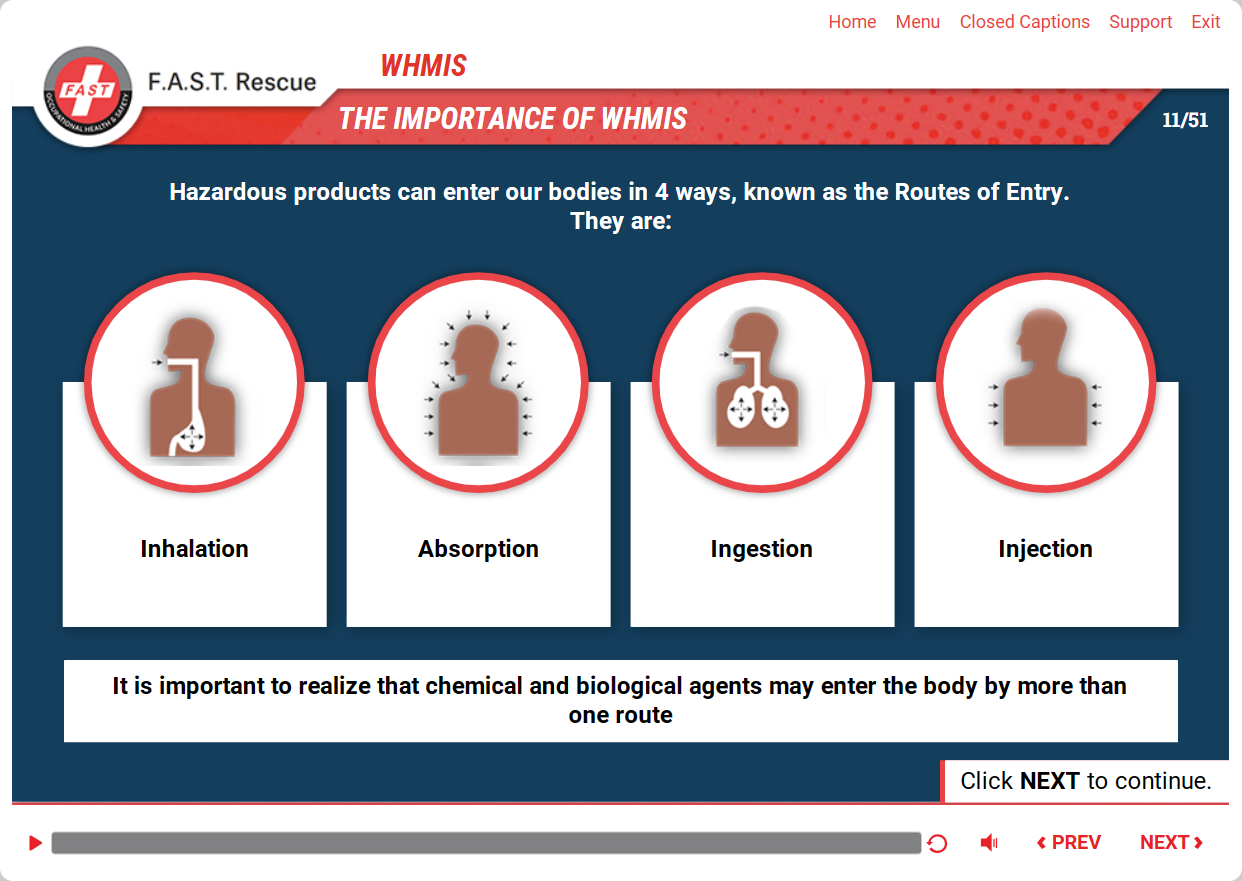
    WHMIS, or the Workplace Hazardous Materials Information System, holds significant importance in ensuring workplace safety. It plays a crucial role in safeguarding the health and well-being of workers who handle hazardous materials in various industries. This chapter highlights hazardous products that pose significant risks to individuals who handle them or work in close proximity to them. These risks can result in various harmful health effects. To safeguard workers from such dangers, the Workplace Hazardous Materials Information System (WHMIS) has been implemented.

    WHMIS is a comprehensive system designed to protect workers from contracting health issues caused by exposure to hazardous products in the workplace. Exposure to these substances can lead to different types of symptoms, which can be acute, chronic, or latent.

  • 3. ROLES AND RESPONSIBILITIES

    In the OHS-WHMIS system, various roles and responsibilities are assigned to ensure the effective implementation and maintenance of workplace safety standards regarding hazardous materials. These roles encompass different levels of the organizational hierarchy, each contributing to the overall safety culture within the workplace. 

    In this chapter, you will learn about the roles and responsibilities of the following:

    1. Managers
    2. Supervisors
    3. Supplier
    4. Employeee
    5. Other worker who deal with hazardous materials

  • 4. WHMIS Labels

    WHMIS labels are standardized labels used to communicate important information about hazardous materials in the workplace. There are two types of WHMIS labels required in the workplace for hazardous products:

    Supplier labels: These labels are applied by the manufacturer or supplier of the hazardous product. They contain important information such as the product identifier, supplier identifier, hazard symbols, hazard statements, precautionary measures, and any other relevant information required by WHMIS regulations.

    Workplace labels: Workplace labels are used when hazardous products are transferred from their original container to a secondary container, such as a spray bottle or storage container, within the workplace. These labels must include the product identifier and appropriate hazard information, ensuring that workers can easily identify the contents and associated risks.

    Apart from the above mentioned chapters, the course also highlights the following:

    Pictograms: Pictograms are standardized symbols used to convey specific hazards associated with chemicals. These symbols are easily recognizable and provide quick visual cues about the potential dangers posed by hazardous materials.

    Safety Data Sheets (SDS): SDSs provide detailed information about hazardous products, including their chemical composition, physical and health hazards, safe handling and storage procedures, and emergency response measures.

    Hazardous Products: This section of the course focuses on identifying and categorizing hazardous products commonly found in the workplace.

    Consumer Products: While workplace safety primarily revolves around hazardous materials used in industrial settings, employees may also encounter hazardous substances in consumer products. This part of the course educates workers on the potential hazards associated with everyday consumer products, such as cleaning agents, paints, and pesticides.

  • 5. Summary

    The OHS-WHMIS Training Program is a comprehensive initiative aimed at promoting workplace safety and ensuring regulatory compliance regarding hazardous materials. Through this program, participants gain essential knowledge and skills to identify, handle, and manage hazardous substances effectively. The training covers various topics, including WHMIS regulations, hazard identification, safety data sheets, and emergency procedures.

    Additionally; the training course covers essential topics related to WHMIS, including the classification and labelling of hazardous materials, safety data sheets (SDS), hazard symbols and pictograms, as well as the rights and responsibilities of employers and employees. It provides a solid foundation of knowledge to help participants recognize and mitigate potential risks and hazards in their work environment.

WHAT YOU WILL GET

  • $11.30/person

  • Course Duration 40 minutes approximately

  • YOU CAN MAKE AS MANY ATTEMPTS AS YOU NEED TO PASS THE EXAM; THERE IS NO LIMIT

  • Your certificate is valid for 3 years from the date of issue

  • Phone, email and chat on weekdays from 8am – 5pm EST

  • SELF-PACED/ELEARNING

  • Record of Training

  • USER MANAGEMENT

  • INSTANT ACCESS

  • MOBILE FRIENDLY

  • Certificate

CONTACT US

2 + 2 = ?

OHS – WHMIS TRAINING COURSE CERTIFICATION

After completing the OHS-WHMIS training, you’ll get a certificate showing you’re ready to handle risks and keep your workplace safe.

CAN THE WHMIS COURSE BE CUSTOMIZED TO FIT INDUSTRY NEEDS OR ORGANIZATIONAL PREFERENCES?

Customized eLearning solutions refer to personalized and tailored online learning platforms or courses designed to meet the specific needs and requirements of an organization or individual. 

Yes, through our custom eLearning solutions, we ensure that your WHMIS courses are tailored to your industry or organizational needs. Our team collaborates closely with you to address specific requirements, including hazardous materials, safety protocols, and organizational policies.

Frequently Asked Questions (FAQs)

WHMIS stands for Workplace Hazardous Materials Information System. It is a comprehensive system used in Canada to provide information on hazardous materials in the workplace.

Yes, the WHMIS online training course is mandatory for all employees who work with hazardous materials in Canada. It is a legal requirement to ensure the safety of workers and compliance with WHMIS regulations.

The main difference between WHMIS and SDS lies in their focus and content:

WHMIS (Workplace Hazardous Materials Information System) is a comprehensive system designed to ensure the safe use, handling, storage, and disposal of hazardous materials in the workplace. It includes elements such as classification criteria, labeling requirements, safety data sheets (SDS), and worker education and training.

SDS (Safety Data Sheets), formerly known as Material Safety Data Sheets (MSDS), provide detailed information about hazardous substances. SDS include information such as chemical composition, physical and chemical properties, health hazards, precautions for safe handling and use, emergency procedures, and disposal considerations. SDS are an essential component of WHMIS and provide crucial information to workers and emergency responders regarding the hazards associated with specific substances.

Under WHMIS (Workplace Hazardous Materials Information System), hazardous materials are classified into several hazard classes based on the types of hazards they pose.

The hazard classes under WHMIS include:

Physical Hazards:

1. Flammable Elements
2. Self-Reactive Substances
3. Pyrophoric Solids and Liquids
4. Self-Heating Substances
5. Organic Peroxides and More

Health Hazards:

1. Acute Toxicity
2. Skin Corrosion/Irritation
3. Serious Eye Damage/Eye Irritation
4. Respiratory or Skin Sensitization
5. Germ Cell Mutagenicity and More

Environmental Hazards:

1. Hazardous to the Aquatic Environment
2. Acute Toxicity to Aquatic Life
3. Chronic Toxicity to Aquatic Life
4. Bioaccumulative Potential
5. Persistence and Degradability

Anyone who works with or is exposed to hazardous materials in the workplace is required to take the WHMIS training course. This includes employees, supervisors, and managers.

Yes, Through our translational and localization services, we translate WHMIS training materials into multiple languages upon request, enabling workers from diverse linguistic backgrounds to access essential safety education in their preferred language.

Please feel free to contact us for group enrollments in our courses! You can email us at [email protected].

$11.30 / BUY NOW GET A QUOTE FOR TEAM