RETURN TO WORK ONLINE TRAINING COURSE FOR WORKERS AND CERTIFICATION

The Return to Work-Workers Course provides you a brief overview of all the mandatory things that need to be taken into account for a fresh start.

Coming Soon
return to work - workers

IN THIS COURSE, YOU WILL LEARN ABOUT

Occupational Health and Safety (OHS) – Online Return to Work – Workers

Once you start the course, you can pause it as needed. The course will automatically bookmark and you can resume it where you left off.

The course is fully narrative and AODA compliant. The topics are explained in detail, represented by relevant images and activities to confirm understanding.

At the end of the module, there is a final test to gauge learners understanding.

RETURN TO WORK – WORKERS TRAINING COURSE OUTLINE

WHAT YOU WILL GET

  • 1. Non - Medical ESRTW

    The chapter describes the concept of Early Safe Return to Work (ESRTW) in non-medical settings, where firms are becoming more proactive in their approach towards workplace injuries.

    When an employee complains of a soreness or fatigueor receives first aid, the employer and the worker immediately determine what the worker can do and what modifications canbe made to job duties and tasks to facilitate the worker’s return to work.

  • 2. Pre-Injury Phase

    The chapter describes the pre-injury phase, which is the phase before an employee gets injured in the workplace.

    New hires are expected to understand that they have an obligation to report any injuries or difficulties they face while performing their tasks in the workplace. They are also expected to participate in the firm’s Early Safe Return to Work (ESRTW) program, which is designed to ensure that any injured employee can return to work as soon as possible.

    In this phase, it is important to ensure that the right employee is hired for the job, which involves evaluating skills, knowledge, and experience of the employee to ensure that they can perform the job safely and effectively.

  • 3. Required Steps

    In this chapter, learn the required steps that are as follows:

    1. Report the injury to your supervisor immediately.
    2. Seek proper medical treatment
    3. Return to the workplace
  • 4. Injury Reporting

    Learn the injury reporting tips that typically include guidelines on how to report injuries, what information to include in the report, who to report to, and how quickly the report should be made.

    Effective injury reporting can help to ensure that injured workers receive prompt and appropriate medical attention, and that the employer can take necessary steps to prevent similar injuries from occurring in the future.

  • 5. Recovery

    1. When Does Recovery Start?
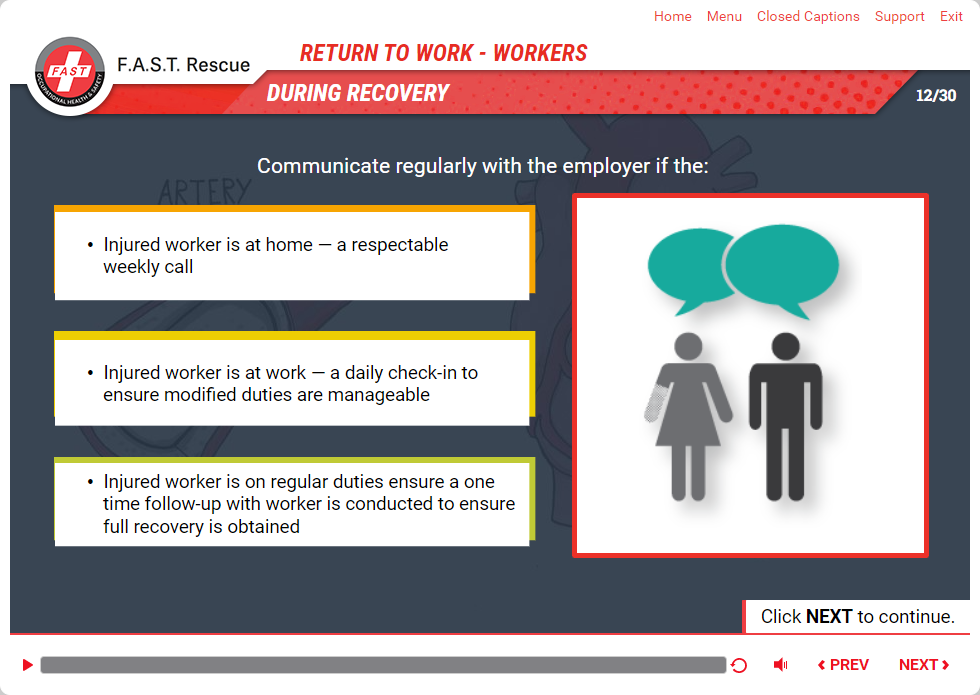
    2. During Recovery
  • 6. Functional Abilities Form s

    This WSIB form must be taken by the injured worker when visiting a medical treating practitioner.

    Basically, a Functional Abilities Form (FAF) is a medical document that is used to assess an injured worker’s physical abilities and limitations related to their job tasks.

    The FAF typically includes information about the worker’s medical condition, any restrictions on their activities, and any accommodations that may be required to enable them to perform their job duties safely and effectively.

  • 7. ESRTW Plan

    The chapter provides an overview of the process of developing an Early and Safe Return to Work (ESRTW) plan in collaboration with the employer and the injured worker.

    The chapter emphasizes the importance of cooperation between the employer and the injured worker to determine the worker’s abilities and identify suitable modified work that can be performed with the worker’s restrictions in mind.

    Basically, working cooperatively with the employer to develop an ESRTW plan is an important step in supporting the injured worker’s safe and timely return to work while minimizing the impact of workplace injuries on productivity and costs.

  • 8. Claim Opened with WSIB

    In this chapter, check the beginning part of the insurance program that is claim with WSIB.

  • 9. Communication

    Communication is needed to facilitate an early and safe return to work. Without communication, the process falters.

  • 10. Hints and Tips

    In this chapter, you will learn the hints and tips to be supportive on modified duties.

  • COMING SOON

  • Course Duration 150 minutes approximately

  • YOU CAN MAKE AS MANY ATTEMPTS AS YOU NEED TO PASS THE EXAM; THERE IS NO LIMIT

  • Your certificate is valid for 3 years from the date of issue

  • Phone, email and chat on weekdays from 8am – 5pm EST

  • SELF-PACED/ELEARNING

  • Record of Training

  • USER MANAGEMENT

  • INSTANT ACCESS

  • MOBILE FRIENDLY

  • Certificate

CONTACT US

eyJpZCI6IjI4IiwibGFiZWwiOiJDb250YWN0IFBhZ2UgMjAyMiIsImFjdGl2ZSI6IjEiLCJvcmlnaW5hbF9pZCI6IjQiLCJ1bmlxdWVfaWQiOiJ2Ym4yM2EiLCJwYXJhbXMiOnsiZW5hYmxlRm9yTWVtYmVyc2hpcCI6IjAiLCJ0cGwiOnsid2lkdGgiOiIxMDAiLCJ3aWR0aF9tZWFzdXJlIjoiJSIsImJnX3R5cGVfMCI6Im5vbmUiLCJiZ19pbWdfMCI6IiIsImJnX2NvbG9yXzAiOiIjY2RjZGNkIiwiYmdfdHlwZV8xIjoiY29sb3IiLCJiZ19pbWdfMSI6IiIsImJnX2NvbG9yXzEiOiIjMzNhYjU1IiwiYmdfdHlwZV8yIjoiY29sb3IiLCJiZ19pbWdfMiI6IiIsImJnX2NvbG9yXzIiOiIjMzJhMzUwIiwiYmdfdHlwZV8zIjoiY29sb3IiLCJiZ19pbWdfMyI6IiIsImJnX2NvbG9yXzMiOiIjMzJhMzUwIiwiZmllbGRfZXJyb3JfaW52YWxpZCI6IiIsImZvcm1fc2VudF9tc2ciOiJUaGFuayB5b3UgZm9yIGNvbnRhY3RpbmcgdXMhIiwiZm9ybV9zZW50X21zZ19jb2xvciI6IiMzMmEzNTAiLCJoaWRlX29uX3N1Ym1pdCI6IjEiLCJyZWRpcmVjdF9vbl9zdWJtaXQiOiJodHRwczpcL1wvd3d3LnN3aWZ0ZWxlYXJuaW5nc2VydmljZXMuY29tXC90aGFua3lvdVwvIiwiZW1haWxfZm9ybV9kYXRhX2FzX3RibCI6IjEiLCJ0ZXN0X2VtYWlsIjoic3VwcG9ydEBzd2lmdGVsZWFybmluZ3NlcnZpY2VzLmNvbSIsInNhdmVfY29udGFjdHMiOiIxIiwiZXhwX2RlbGltIjoiOyIsImZiX2NvbnZlcnRfYmFzZSI6IiIsImZpZWxkX3dyYXBwZXIiOiI8ZGl2IGZpZWxkX3NoZWxsX2NsYXNzZXMgZmllbGRfc2hlbGxfc3R5bGVzPltmaWVsZF08XC9kaXY+In0sImZpZWxkcyI6W3siYnNfY2xhc3NfaWQiOiI2IiwibmFtZSI6ImZpcnN0X25hbWUiLCJsYWJlbCI6IiIsInBsYWNlaG9sZGVyIjoiRmlyc3QgTmFtZSIsInZhbHVlIjoiIiwidmFsdWVfcHJlc2V0IjoiIiwiaHRtbCI6InRleHQiLCJtYW5kYXRvcnkiOiIxIiwibWluX3NpemUiOiIiLCJtYXhfc2l6ZSI6IiIsImFkZF9jbGFzc2VzIjoiIiwiYWRkX3N0eWxlcyI6IiIsImFkZF9hdHRyIjoic3R5bGU9XCJ0ZXh0LWNvbG9yOiAjMzMzXCIiLCJ2bl9vbmx5X251bWJlciI6IjAiLCJ2bl9vbmx5X2xldHRlcnMiOiIwIiwidm5fcGF0dGVybiI6IjAiLCJ2bl9lcXVhbCI6IiIsImljb25fY2xhc3MiOiIiLCJpY29uX3NpemUiOiIiLCJpY29uX2NvbG9yIjoiIiwidGVybXMiOiIifSx7ImJzX2NsYXNzX2lkIjoiNiIsIm5hbWUiOiJsYXN0X25hbWUiLCJsYWJlbCI6IiIsInBsYWNlaG9sZGVyIjoiTGFzdCBOYW1lIiwidmFsdWUiOiIiLCJodG1sIjoidGV4dCIsIm1hbmRhdG9yeSI6IjAiLCJtaW5fc2l6ZSI6IiIsIm1heF9zaXplIjoiIiwiYWRkX2NsYXNzZXMiOiIiLCJhZGRfc3R5bGVzIjoiIiwiYWRkX2F0dHIiOiIiLCJ2bl9vbmx5X251bWJlciI6IjAiLCJ2bl9vbmx5X2xldHRlcnMiOiIwIiwidm5fcGF0dGVybiI6IjAifSx7ImJzX2NsYXNzX2lkIjoiMTIiLCJuYW1lIjoiZW1haWwiLCJsYWJlbCI6IiIsInBsYWNlaG9sZGVyIjoiRW1haWwiLCJ2YWx1ZSI6IiIsImh0bWwiOiJlbWFpbCIsIm1hbmRhdG9yeSI6IjEiLCJtaW5fc2l6ZSI6IiIsIm1heF9zaXplIjoiIiwiYWRkX2NsYXNzZXMiOiIiLCJhZGRfc3R5bGVzIjoiIiwiYWRkX2F0dHIiOiIiLCJ2bl9vbmx5X251bWJlciI6IjAiLCJ2bl9vbmx5X2xldHRlcnMiOiIwIiwidm5fcGF0dGVybiI6IjAifSx7ImJzX2NsYXNzX2lkIjoiMTIiLCJuYW1lIjoiUGhvbmVOdW1iZXIiLCJsYWJlbCI6IlBob25lIE51bWJlcjYiLCJwbGFjZWhvbGRlciI6IlBob25lIE51bWJlcjYiLCJ2YWx1ZSI6IiIsInZhbHVlX3ByZXNldCI6IiIsImh0bWwiOiJ0ZXh0IiwibWFuZGF0b3J5IjoiMCIsIm1pbl9zaXplIjoiMyIsIm1heF9zaXplIjoiMjAiLCJhZGRfY2xhc3NlcyI6IiIsImFkZF9zdHlsZXMiOiIiLCJhZGRfYXR0ciI6IiIsInZuX29ubHlfbnVtYmVyIjoiMCIsInZuX29ubHlfbGV0dGVycyI6IjAiLCJ2bl9wYXR0ZXJuIjoiIiwidm5fZXF1YWwiOiIiLCJpY29uX2NsYXNzIjoiIiwiaWNvbl9zaXplIjoiIiwiaWNvbl9jb2xvciI6IiIsInRlcm1zIjoiIn0seyJic19jbGFzc19pZCI6IjEyIiwibmFtZSI6InN1YmplY3QiLCJsYWJlbCI6IiIsInBsYWNlaG9sZGVyIjoiU3ViamVjdCIsInZhbHVlIjoiIiwidmFsdWVfcHJlc2V0IjoiIiwiaHRtbCI6InRleHQiLCJtYW5kYXRvcnkiOiIxIiwibWluX3NpemUiOiIiLCJtYXhfc2l6ZSI6IiIsImFkZF9jbGFzc2VzIjoiIiwiYWRkX3N0eWxlcyI6IiIsImFkZF9hdHRyIjoiIiwidm5fb25seV9udW1iZXIiOiIwIiwidm5fb25seV9sZXR0ZXJzIjoiMCIsInZuX3BhdHRlcm4iOiIiLCJ2bl9lcXVhbCI6IiIsImljb25fY2xhc3MiOiIiLCJpY29uX3NpemUiOiIiLCJpY29uX2NvbG9yIjoiIiwidGVybXMiOiIifSx7ImJzX2NsYXNzX2lkIjoiMTIiLCJuYW1lIjoibWVzc2FnZSIsImxhYmVsIjoiIiwicGxhY2Vob2xkZXIiOiJQbGVhc2Ugc2hhcmUgeW91ciByZXF1aXJlbWVudHMiLCJ2YWx1ZSI6IiIsInZhbHVlX3ByZXNldCI6IiIsImh0bWwiOiJ0ZXh0YXJlYSIsIm1hbmRhdG9yeSI6IjEiLCJtaW5fc2l6ZSI6IiIsIm1heF9zaXplIjoiIiwiYWRkX2NsYXNzZXMiOiIiLCJhZGRfc3R5bGVzIjoiIiwiYWRkX2F0dHIiOiIiLCJ2bl9vbmx5X251bWJlciI6IjAiLCJ2bl9vbmx5X2xldHRlcnMiOiIwIiwidm5fcGF0dGVybiI6IjAiLCJ2bl9lcXVhbCI6IiIsImljb25fY2xhc3MiOiIiLCJpY29uX3NpemUiOiIiLCJpY29uX2NvbG9yIjoiIiwidGVybXMiOiIifSx7ImJzX2NsYXNzX2lkIjoiMTIiLCJuYW1lIjoicmVDQVBUQ0hBIiwibGFiZWwiOiJyZUNBUFRDSEEiLCJodG1sIjoicmVjYXB0Y2hhIiwidGVybXMiOiIiLCJyZWNhcC10aGVtZSI6ImxpZ2h0IiwicmVjYXAtdHlwZSI6ImF1ZGlvIiwicmVjYXAtc2l6ZSI6Im5vcm1hbCJ9LHsiYnNfY2xhc3NfaWQiOiIxMiIsIm5hbWUiOiJTdWJtaXQiLCJsYWJlbCI6IlN1Ym1pdCIsImh0bWwiOiJzdWJtaXQiLCJhZGRfY2xhc3NlcyI6IiIsImFkZF9zdHlsZXMiOiIiLCJhZGRfYXR0ciI6InN0eWxlPVwiYmFja2dyb3VuZC1jb2xvcjogIzM4NzhiMzsgY29sb3I6ICNmZmZcIiIsImljb25fY2xhc3MiOiIiLCJpY29uX3NpemUiOiIiLCJpY29uX2NvbG9yIjoiIiwidGVybXMiOiIifV0sIm9wdHNfYXR0cnMiOnsiYmdfbnVtYmVyIjoiNCJ9fSwiaW1nX3ByZXZpZXciOiJzaW1wbGUtd2hpdGUucG5nIiwidmlld3MiOiI1MzIzOSIsInVuaXF1ZV92aWV3cyI6IjM3MTMwIiwiYWN0aW9ucyI6IjExNjMiLCJzb3J0X29yZGVyIjoiNCIsImlzX3BybyI6IjAiLCJhYl9pZCI6IjAiLCJkYXRlX2NyZWF0ZWQiOiIyMDIyLTA5LTEwIDA3OjIwOjQ3IiwiaW1nX3ByZXZpZXdfdXJsIjoiaHR0cHM6XC9cL3d3dy5zd2lmdGVsZWFybmluZ3NlcnZpY2VzLmNvbVwvd3AtY29udGVudFwvcGx1Z2luc1wvY29udGFjdC1mb3JtLWJ5LXN1cHN5c3RpY1wvYXNzZXRzXC9mb3Jtc1wvaW1nXC9wcmV2aWV3XC9zaW1wbGUtd2hpdGUucG5nIiwidmlld19pZCI6IjI4XzY5MjQ3OSIsInZpZXdfaHRtbF9pZCI6ImNzcEZvcm1TaGVsbF8yOF82OTI0NzkiLCJjb25uZWN0X2hhc2giOiJkNGJiNGFmODM5ZWUyOGYxZmY5MGUxNTJkM2RkMGFhMiJ9

Frequently Asked Questions (FAQs)

ESRTW is a process that helps injured workers return to work as soon as possible, in a safe and timely manner, with the support of their employer and healthcare professionals.

Modified duties refer to temporary job duties that are modified to accommodate the worker’s abilities and limitations, allowing them to perform productive work while they recover from their injury.

If your healthcare professional determines that the modified duties are appropriate and safe for you to perform, then you are generally expected to cooperate and perform the assigned duties to the best of your ability.

If you have restrictions on your ability to perform certain job tasks due to a workplace injury, your employer may work with you to identify suitable modified duties or accommodations that allow you to work within your restrictions while you recover.

Employers are generally prohibited from terminating an employee while they are on modified duties due to a workplace injury. However, other employment-related issues such as performance and conduct may still be addressed by the employer.

Since our learning management system is so simple and intuitive to use, most users have no issues. However, if you do run into problems, support is offered via phone, email, and chat.

No. When you come back to the test after taking a break, you will have to retake it from scratch.