OHS – TRENCHING AND SHORING TRAINING & CERTIFICATION FOR CONSTRUCTION

Trenching and Shoring are construction terms that describe activities related to digging trenches and supporting their walls. Trenching and Shoring training is essential, providing individuals with the knowledge and skills needed for safe trench support installation.

Coming Soon
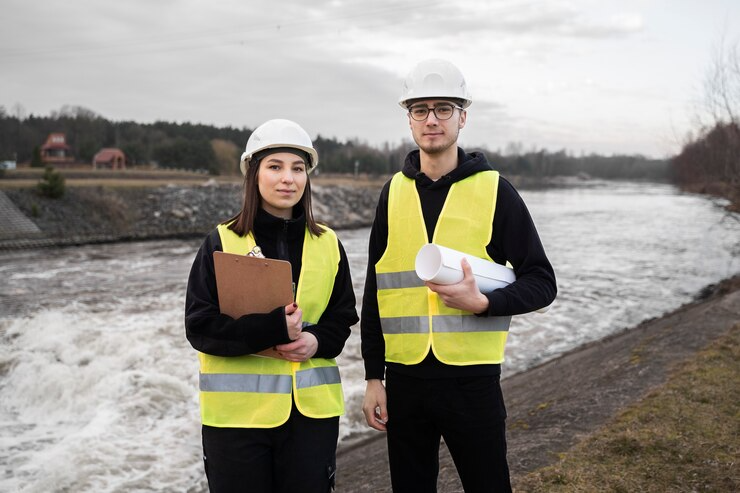
trenching and shoring training-min

Trenching and Shoring Training for Construction General Hazard Awareness Program.

A training module for preventing trenching and shoring training hazards. Working in an excavated trench is dangerous. The greatest risk comes from an unexpected cave-in and other hazards include falls, falling objects, lack of oxygen in a close space, breathing toxic fumes, flooding, contact with natural gas line and electrical cable (buried and overhead).

trenching and shoring training

OHS – TRENCHING AND SHORING TRAINING COURSE

The Trenching and Shoring Training Course is developed in accordance with Occupational Health and Safety (OHS) standards, ensuring a focused and compliant learning experience.

IN THIS COURSE, YOU WILL LEARN ABOUT

trenching and shoring training

Occupational Health and Safety (OHS) – Trenching and Shoring Training for Construction Online Program

Studies show that excavation work is one of the most hazardous types of work done in the construction industry. Injuries from excavation work tend to be of a very serious nature and often result in fatalities.

A significant number of deaths and injuries in sewer and water main work are directly related to trenching. Trenching facilities are mainly caused by cave-ins. Death occurs by suffocation or crushing when a worker is buried by falling soil.

Regardless of how unlikely an accident may occur, we must prepare and plan for emergencies as pre-planning of excavation operations can greatly reduce the risk of injuries and/or facilities on the worksite.

WHO IS REQUIRED TO TAKE TRENCHING AND SHORING TRAINING?

Trenching and shoring training is essential for anyone involved in excavation activities, such as: 

1. Construction workers
2. Contractors
3. Supervisors

This training is crucial because it provides the knowledge and skills needed to safely install trench support, ensuring proper safety measures are in place and preventing potential hazards.

trenching and shoring training

WHY IS TRENCHING AND SHORING TRAINING IMPORTANT?

Trenching and shoring training is important in preventing accidents and injuries related to excavation work. It covers essential aspects such as:

Proper techniques

Equipment usage

Safety protocols

Trenching and shoring training significantly reduces the risk of incidents, ensuring a safer work environment.

TRENCHING AND SHORING TRAINING FOR CONSTRUCTION ONLINE COURSE OUTLINE

The course covers the following topics:

  • 1. Questions to be answered prior to digging

    Questions to be Answered Prior to Digging refers to a set of inquiries that should be addressed before starting any excavation or digging activities. One of the most important steps in avoiding cave-ins is the pre-planning of excavation operations. In the beginning of the module, a list of important questions are provided that must be answered prior to digging.

  • 2. Legislation

    This chapter provides a guideline to the supervisors and workers who do excavating and trenching must be familiar with Part III excavation section of the constructions Regulation 213/91.

  • 3. Soil Types

    Soil types refers to the various categories or classifications of soil based on their composition, texture, and characteristics. In this chapter, you will learn that Soil is classified as type 1, 2, 3, 4 in accordance with the descriptions set out in O. Reg. 213/91, s.226. These soil types are also explained in this chapter.

  • 4. TRENCHING AND SHORING – Inspections

    Trenching and shoring inspections involve a detailed examination of excavations and the supporting structures to ensure compliance with safety regulations. Know that inspections of excavations, adjacent areas, and protective systems must be made by a competent person.

  • 5. TRENCHING AND SHORING – Hazardous Atmospheres

    Trenching and shoring hazardous atmospheres refers to unsafe conditions in excavated areas that can endanger the health and safety of those involved in trenching and shoring activities. In this chapter, you will learn about the instructions to be considered when testing for atmospheric contaminants.

  • 6. Cave-in Causes

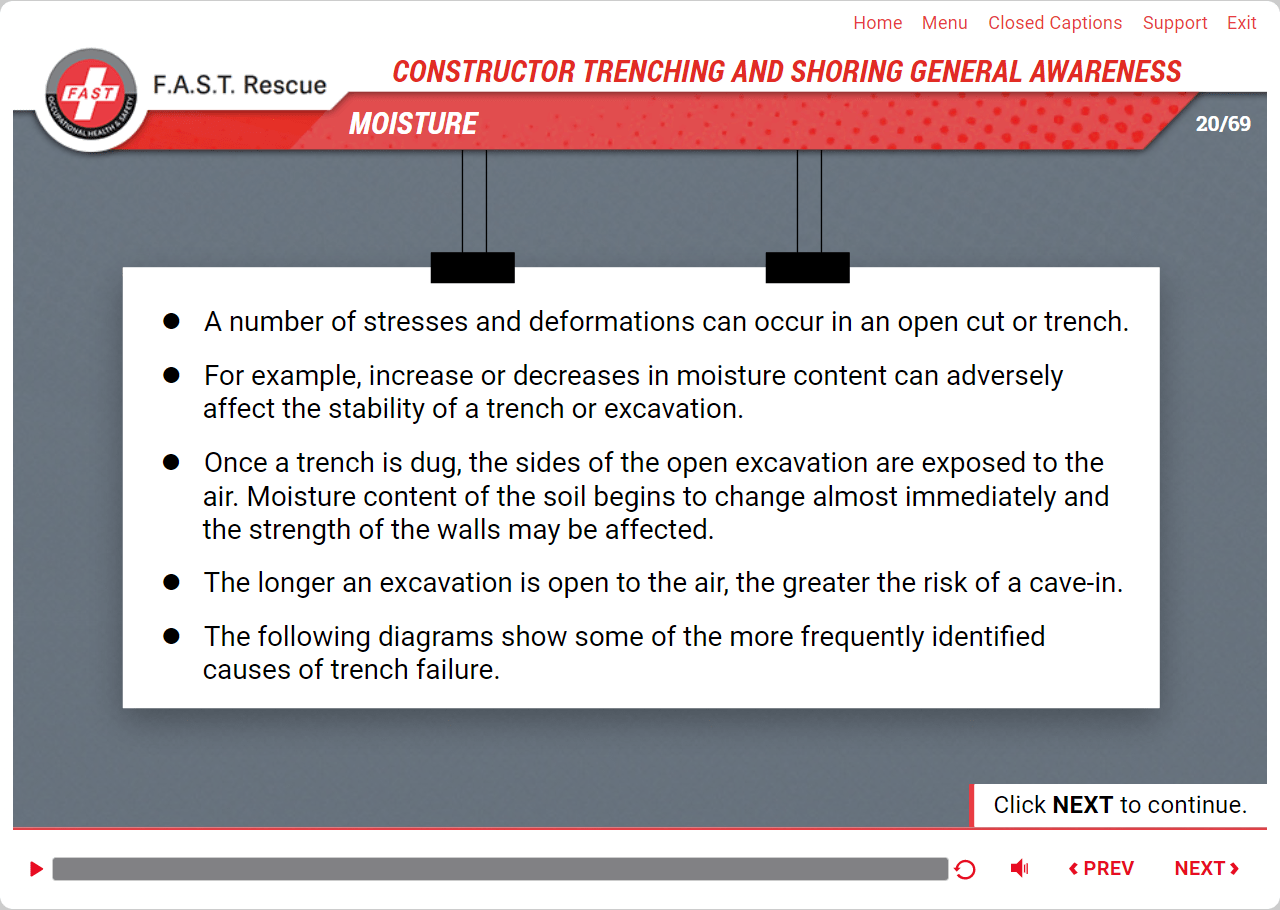
    Cave-in causes refer to the factors or circumstances that can lead to the collapse of excavated soil or structures, creating a hazardous condition known as a cave-in. Learn about different factors that affect trench stability such as moisture, boiling, heaving, subsidence and bulging, tension cracks, sliding or sloughing, toppling, spoil pilings, vibration, surcharge, previous excavation, existing foundations, weather. These factors are explained in detail in the chapter.

  • 7. Protection against cave-ins

    Protection against cave-ins refers to the measures and strategies implemented to prevent the collapse of excavated soil or structures during construction or excavation activities. Learn about the three basic methods of protecting workers against trench cave-ins such as sloping, trench boxes/shields and shoring.

  • 8. Allowable Slopes

    Allowable slopes refer to the acceptable angles or inclinations at which excavated surfaces, such as trench walls, can be maintained without risking collapse. In this chapter, you will know about the allowable slope information is provided for different types of soils.

  • 9. Sloping

    Sloping refers to the process of adjusting the angle or incline of excavated surfaces, such as trench walls, to enhance stability and reduce the risk of collapse. In this chapter, you will understand that though sloping can reduce the risk of a cave-in, the angle must be sufficient to prevent spoil not only from sliding back but also from exerting too much pressure on the trench wall.

  • 10. Shoring

    Shoring is a construction practice that involves providing support or reinforcement to the walls of a trench or excavation to prevent collapse. This chapter explains about shoring. Shoring (or shielding) is used when the location or depth of the cut makes sloping back to the maximum allowable slope impractical.

    Shoring systems consists of posts, wales, struts, and sheeting. These basic types of shoring are:

    1. Timber
    2. Hydraulic/Pneumatic
    3. Pre-fabricated – trench box

    Timber shoring, hydraulic shoring, pneumatic shoring are explained in detail with the support of images.

  • 11. Underpinning

    Underpinning is a construction technique used to strengthen or support the foundation of an existing structure. Underpinning involves stabilizing adjacent structures, foundations and other intrusions that may have an impact on the excavation. It is a procedure in which the foundation is physically reinforced. In this chapter learn about underpinning.

  • 12. Pre-fabricated/Trench Boxes (Engineered)

    Pre-fabricated trench boxes (engineered) refers to ready-made, specially designed protective structures used in excavation work. Trench boxes are different from shopping. They may also be used in combination with slopping and benching. Learn about Pre-fabricated/Trench Boxes in this chapter.

  • 13. Benching

    Benching in construction and excavation refers to the practice of creating horizontal steps or benches in the walls of a trench or excavation. You will learn about the two basic types of benching – simple and multiple. The type of soil determines the horizontal to vertical ratio of the benched side. Learn in this chapter the benching dimensions.

  • 14. Safe Access/Egress

    Trenches must be provided with ladders so that workers can enter and exit safely whether protected by boxes, shoring or sloping. Learn in this chapter how ladders need to be placed safety.

  • 15. Final Test

    In the final test provided, questions are in the form of MCQs (Multiple choice questions). Learners have to pass the test successfully in three attempts.

WHAT YOU WILL GET

trenching and shoring training
  • COMING SOON

  • Course Duration 60 Minutes approximately

  • You can make as many attempts as you need to pass the exam; there is no limit

  • Your certificate is valid for 3 years from the date of issue

  • Phone, email and chat on weekdays from 8am – 5pm EST

  • SELF-PACED/ELEARNING

  • RECORD OF TRAINING

  • USER MANAGEMENT

  • INSTANT ACCESS

  • MOBILE FRIENDLY

  • CERTIFICATE

CONTACT US

0 + 1 = ?

WHY CHOOSE OUR CUSTOM ELEARNING SERVICES FOR TRENCHING AND SHORING TRAINING? 

Custom eLearning Services refer to tailored educational solutions designed to meet specific learning needs or objectives. 

Our Custom eLearning Services for training courses ensures tailored content, engaging learning experiences, adaptability to various needs, and compliance with safety standards, cost-effectiveness, and convenient accessibility for participants.

elearning

OHS – TRENCHING AND SHORING TRAINING COURSE CERTIFICATION

After completing the training program, you will receive a certification for OHS – Trenching And Shoring under OHS regulations.

Frequently Asked Questions (FAQs)

Trenching and shoring training is a specialized program designed to educate individuals on the safe practices and techniques involved in excavating and supporting trenches to prevent cave-ins and ensure worker safety.

Ensuring safety during trenching operations is paramount to prevent accidents and protect workers.

This includes:

1. Protective Systems
2. Daily Inspections
3. Training and Awareness

Shoring is the process of supporting the walls of a trench to prevent collapse. It plays a critical role in maintaining a stable working environment during excavation.

Trenching and shoring training addresses various hazards associated with excavation, including:

1. Cave-ins: Proper techniques to prevent and respond to soil collapse.
2. Hazardous atmospheres: Identification and mitigation of gases and substances.
3. Falling objects: Techniques to secure tools and materials in trenches.

Trenching is the process of excavating and removing earth to create an elongated depression in the ground. It is necessary for various construction and infrastructure projects, such as laying pipelines, installing utilities, or creating foundations.

Yes, trenching and shoring training programs can be customized to address the unique requirements of different industries. Our custom eLearning content development for training ensures the creation of personalized and effective materials tailored to meet your specific training requirements.

Soil analysis is a critical step in assessing the stability of the soil and mitigating potential risks during trenching.

A comprehensive trenching and shoring safety plan should include:

1. Site analysis
2. Emergency response procedures
3. Worker training programs