
MACHINE GUARDING TRAINING ONLINE COURSE AND CERTIFICATION

Machine guarding is the process of using physical barriers and safety devices to protect workers from hazardous machinery and equipment. There are several types of machine guarding, including fixed guards, adjustable guards, interlocked guards, and self-adjusting guards.

Coming Soon
machine guarding

IN THIS COURSE, YOU WILL LEARN ABOUT

Occupational Health and Safety (OHS) – Online Machine Guarding

The course ’Machine Guarding’ helps you learn about machine guarding in detail in an engaging manner to reap its benefits in the best possible manner.

MACHINE GUARDING TRAINING COURSE OUTLINE

WHAT YOU WILL GET

  • 1. Prime Mover

    Learn about prime mover which serves as an initial source of motive power.

  • 2. Transmission Equipment

    The term “transmission equipment” refers to any object or set of objects that is used to transfer the motion generated by a prime mover to a machine that can make use of this motion. This can include a variety of different components, such as a shaft, pulley, belt, chain, gear, clutch or other device.

    The purpose of transmission equipment is to transfer the energy or power generated by a prime mover, such as an engine or motor, to another machine or device that can use this power to perform a specific function.

    For example, in a car, the transmission system is used to transfer the power generated by the engine to the wheels of the vehicle, allowing it to move forward.

  • 3. Protective Element

    The term “protective element” refers to any physical component or device that is designed to prevent access to a particular area or object. This can include a range of different devices, such as shields, guards, operating controls, locking devices, or any other mechanism that is intended to prevent unintended or unauthorized access.

    The purpose of a protective element is to ensure that people are kept safe from potential hazards or dangers that might exist within a given environment. For example, a guard might be used to prevent someone from accidentally coming into contact with a dangerous piece of machinery, while a locking device might be used to prevent unauthorized access to a restricted area.

    The course ‘Machine Guarding’ also helps you learn about the following:
    Reg.851–Sec. 24 & 25
    Reg.851–Sec. 26 & 27
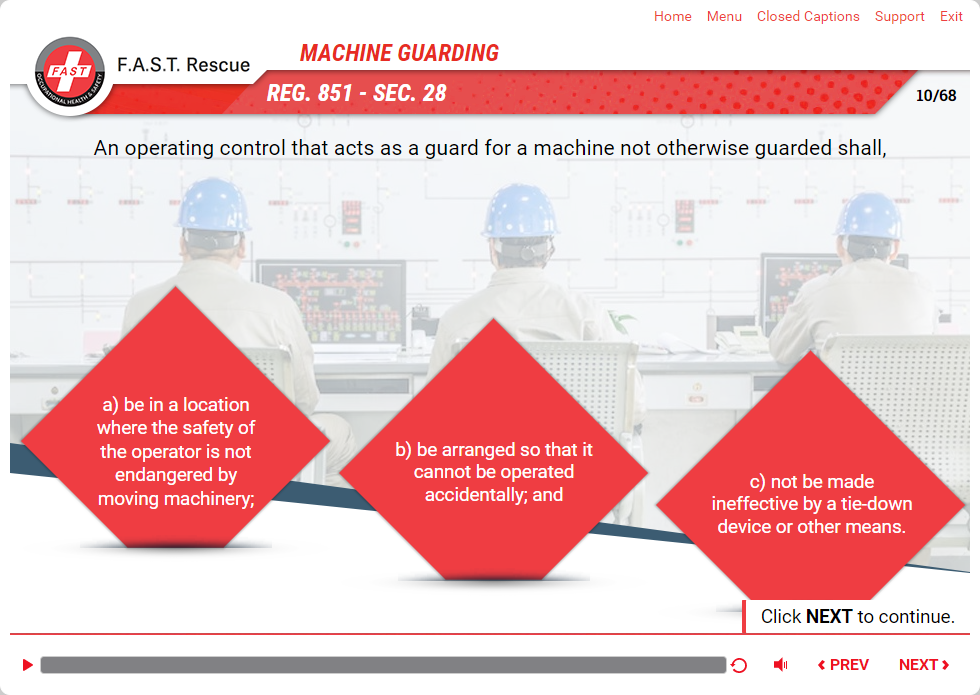
    Reg.851–Sec. 28
    Reg.851–Sec. 29
    Reg.851–Sec. 30
    Reg.851–Sec. 33
    Reg.851–Sec. 34
    Reg.851–Sec. 35
    Reg.851–Sec. 38
    Reg.851–Sec. 39
    Reg.851–Sec. 44
    Reg.851–Sec. 44.1 & 44.2
    Reg.851–Sec. 83

  • 4. Make Sure Machine Guards Are In Place

    The chapter provides an overview of the importance of machine guarding in the workplace. It emphasizes the need for all guards to be correctly and securely fitted before operating a machine.

    It explains that machine guards are essential for providing protection to workers while operating machinery. It is highlighted that guards need not be complicated and should not interfere with productivity. Overall, the content stresses the importance of machine guarding to ensure the safety of workers in the workplace.

  • 5. Hazardous Machine Parts

    When it comes to machine safety, it is essential to identify and understand the hazardous machine parts that can pose a risk of injury to workers.

    All machines consist of three fundamental areas: the point of operation, the power transmission device, and other moving parts.

  • 6. Identify the Hazards

    The chapter defines and explains the difference between a hazard and a risk.

    A hazard is defined as something that has the potential to cause harm or injury, such as a sharp object, a high voltage wire, or a slippery surface.

    A risk, on the other hand, is the likelihood that a hazard will actually cause an injury, as well as how severe the injury could be.

  • 7. Parts of a Machine to Look At to Find the Danger Areas

    Learn the parts of a machine that have been described in a comprehensive manner, which are as follows:

    • Grinding Wheel Hazards
    • Conveyor Hazard Points
  • 8. Types of Guards

    Machine guards are physical barriers that are used to protect workers from the hazards of machinery.

    There are several different types of guards that can be used, depending on the specific needs of the machine and the type of work being performed.

    Some common types of guards include fixed guards, which are permanent barriers that completely enclose the hazardous area of a machine, adjustable guards, which can be moved to provide access to the machine while still protecting workers from hazardous areas, interlocking guards, which prevent the machine from operating unless the guard is in place, and self-adjusting guards, which adjust automatically based on the size of the material being processed.

  • 9. Safety Devices

    Safety devices help prevent contact with points of operation and may replace or supplement guards.

    To learn in detail about it, let’s check out the course.

  • COMING SOON

  • Course Duration 150 minutes approximately

  • YOU CAN MAKE AS MANY ATTEMPTS AS YOU NEED TO PASS THE EXAM; THERE IS NO LIMIT

  • Your certificate is valid for 3 years from the date of issue

  • Phone, email and chat on weekdays from 8am – 5pm EST

  • SELF-PACED/ELEARNING

  • Record of Training

  • USER MANAGEMENT

  • INSTANT ACCESS

  • MOBILE FRIENDLY

  • Certificate

CONTACT US

eyJpZCI6IjI4IiwibGFiZWwiOiJDb250YWN0IFBhZ2UgMjAyMiIsImFjdGl2ZSI6IjEiLCJvcmlnaW5hbF9pZCI6IjQiLCJ1bmlxdWVfaWQiOiJ2Ym4yM2EiLCJwYXJhbXMiOnsiZW5hYmxlRm9yTWVtYmVyc2hpcCI6IjAiLCJ0cGwiOnsid2lkdGgiOiIxMDAiLCJ3aWR0aF9tZWFzdXJlIjoiJSIsImJnX3R5cGVfMCI6Im5vbmUiLCJiZ19pbWdfMCI6IiIsImJnX2NvbG9yXzAiOiIjY2RjZGNkIiwiYmdfdHlwZV8xIjoiY29sb3IiLCJiZ19pbWdfMSI6IiIsImJnX2NvbG9yXzEiOiIjMzNhYjU1IiwiYmdfdHlwZV8yIjoiY29sb3IiLCJiZ19pbWdfMiI6IiIsImJnX2NvbG9yXzIiOiIjMzJhMzUwIiwiYmdfdHlwZV8zIjoiY29sb3IiLCJiZ19pbWdfMyI6IiIsImJnX2NvbG9yXzMiOiIjMzJhMzUwIiwiZmllbGRfZXJyb3JfaW52YWxpZCI6IiIsImZvcm1fc2VudF9tc2ciOiJUaGFuayB5b3UgZm9yIGNvbnRhY3RpbmcgdXMhIiwiZm9ybV9zZW50X21zZ19jb2xvciI6IiMzMmEzNTAiLCJoaWRlX29uX3N1Ym1pdCI6IjEiLCJyZWRpcmVjdF9vbl9zdWJtaXQiOiJodHRwczpcL1wvd3d3LnN3aWZ0ZWxlYXJuaW5nc2VydmljZXMuY29tXC90aGFua3lvdVwvIiwiZW1haWxfZm9ybV9kYXRhX2FzX3RibCI6IjEiLCJ0ZXN0X2VtYWlsIjoic3VwcG9ydEBzd2lmdGVsZWFybmluZ3NlcnZpY2VzLmNvbSIsInNhdmVfY29udGFjdHMiOiIxIiwiZXhwX2RlbGltIjoiOyIsImZiX2NvbnZlcnRfYmFzZSI6IiIsImZpZWxkX3dyYXBwZXIiOiI8ZGl2IGZpZWxkX3NoZWxsX2NsYXNzZXMgZmllbGRfc2hlbGxfc3R5bGVzPltmaWVsZF08XC9kaXY+In0sImZpZWxkcyI6W3siYnNfY2xhc3NfaWQiOiI2IiwibmFtZSI6ImZpcnN0X25hbWUiLCJsYWJlbCI6IiIsInBsYWNlaG9sZGVyIjoiRmlyc3QgTmFtZSIsInZhbHVlIjoiIiwidmFsdWVfcHJlc2V0IjoiIiwiaHRtbCI6InRleHQiLCJtYW5kYXRvcnkiOiIxIiwibWluX3NpemUiOiIiLCJtYXhfc2l6ZSI6IiIsImFkZF9jbGFzc2VzIjoiIiwiYWRkX3N0eWxlcyI6IiIsImFkZF9hdHRyIjoic3R5bGU9XCJ0ZXh0LWNvbG9yOiAjMzMzXCIiLCJ2bl9vbmx5X251bWJlciI6IjAiLCJ2bl9vbmx5X2xldHRlcnMiOiIwIiwidm5fcGF0dGVybiI6IjAiLCJ2bl9lcXVhbCI6IiIsImljb25fY2xhc3MiOiIiLCJpY29uX3NpemUiOiIiLCJpY29uX2NvbG9yIjoiIiwidGVybXMiOiIifSx7ImJzX2NsYXNzX2lkIjoiNiIsIm5hbWUiOiJsYXN0X25hbWUiLCJsYWJlbCI6IiIsInBsYWNlaG9sZGVyIjoiTGFzdCBOYW1lIiwidmFsdWUiOiIiLCJodG1sIjoidGV4dCIsIm1hbmRhdG9yeSI6IjAiLCJtaW5fc2l6ZSI6IiIsIm1heF9zaXplIjoiIiwiYWRkX2NsYXNzZXMiOiIiLCJhZGRfc3R5bGVzIjoiIiwiYWRkX2F0dHIiOiIiLCJ2bl9vbmx5X251bWJlciI6IjAiLCJ2bl9vbmx5X2xldHRlcnMiOiIwIiwidm5fcGF0dGVybiI6IjAifSx7ImJzX2NsYXNzX2lkIjoiMTIiLCJuYW1lIjoiZW1haWwiLCJsYWJlbCI6IiIsInBsYWNlaG9sZGVyIjoiRW1haWwiLCJ2YWx1ZSI6IiIsImh0bWwiOiJlbWFpbCIsIm1hbmRhdG9yeSI6IjEiLCJtaW5fc2l6ZSI6IiIsIm1heF9zaXplIjoiIiwiYWRkX2NsYXNzZXMiOiIiLCJhZGRfc3R5bGVzIjoiIiwiYWRkX2F0dHIiOiIiLCJ2bl9vbmx5X251bWJlciI6IjAiLCJ2bl9vbmx5X2xldHRlcnMiOiIwIiwidm5fcGF0dGVybiI6IjAifSx7ImJzX2NsYXNzX2lkIjoiMTIiLCJuYW1lIjoiUGhvbmVOdW1iZXIiLCJsYWJlbCI6IlBob25lIE51bWJlcjYiLCJwbGFjZWhvbGRlciI6IlBob25lIE51bWJlcjYiLCJ2YWx1ZSI6IiIsInZhbHVlX3ByZXNldCI6IiIsImh0bWwiOiJ0ZXh0IiwibWFuZGF0b3J5IjoiMCIsIm1pbl9zaXplIjoiMyIsIm1heF9zaXplIjoiMjAiLCJhZGRfY2xhc3NlcyI6IiIsImFkZF9zdHlsZXMiOiIiLCJhZGRfYXR0ciI6IiIsInZuX29ubHlfbnVtYmVyIjoiMCIsInZuX29ubHlfbGV0dGVycyI6IjAiLCJ2bl9wYXR0ZXJuIjoiIiwidm5fZXF1YWwiOiIiLCJpY29uX2NsYXNzIjoiIiwiaWNvbl9zaXplIjoiIiwiaWNvbl9jb2xvciI6IiIsInRlcm1zIjoiIn0seyJic19jbGFzc19pZCI6IjEyIiwibmFtZSI6InN1YmplY3QiLCJsYWJlbCI6IiIsInBsYWNlaG9sZGVyIjoiU3ViamVjdCIsInZhbHVlIjoiIiwidmFsdWVfcHJlc2V0IjoiIiwiaHRtbCI6InRleHQiLCJtYW5kYXRvcnkiOiIxIiwibWluX3NpemUiOiIiLCJtYXhfc2l6ZSI6IiIsImFkZF9jbGFzc2VzIjoiIiwiYWRkX3N0eWxlcyI6IiIsImFkZF9hdHRyIjoiIiwidm5fb25seV9udW1iZXIiOiIwIiwidm5fb25seV9sZXR0ZXJzIjoiMCIsInZuX3BhdHRlcm4iOiIiLCJ2bl9lcXVhbCI6IiIsImljb25fY2xhc3MiOiIiLCJpY29uX3NpemUiOiIiLCJpY29uX2NvbG9yIjoiIiwidGVybXMiOiIifSx7ImJzX2NsYXNzX2lkIjoiMTIiLCJuYW1lIjoibWVzc2FnZSIsImxhYmVsIjoiIiwicGxhY2Vob2xkZXIiOiJQbGVhc2Ugc2hhcmUgeW91ciByZXF1aXJlbWVudHMiLCJ2YWx1ZSI6IiIsInZhbHVlX3ByZXNldCI6IiIsImh0bWwiOiJ0ZXh0YXJlYSIsIm1hbmRhdG9yeSI6IjEiLCJtaW5fc2l6ZSI6IiIsIm1heF9zaXplIjoiIiwiYWRkX2NsYXNzZXMiOiIiLCJhZGRfc3R5bGVzIjoiIiwiYWRkX2F0dHIiOiIiLCJ2bl9vbmx5X251bWJlciI6IjAiLCJ2bl9vbmx5X2xldHRlcnMiOiIwIiwidm5fcGF0dGVybiI6IjAiLCJ2bl9lcXVhbCI6IiIsImljb25fY2xhc3MiOiIiLCJpY29uX3NpemUiOiIiLCJpY29uX2NvbG9yIjoiIiwidGVybXMiOiIifSx7ImJzX2NsYXNzX2lkIjoiMTIiLCJuYW1lIjoicmVDQVBUQ0hBIiwibGFiZWwiOiJyZUNBUFRDSEEiLCJodG1sIjoicmVjYXB0Y2hhIiwidGVybXMiOiIiLCJyZWNhcC10aGVtZSI6ImxpZ2h0IiwicmVjYXAtdHlwZSI6ImF1ZGlvIiwicmVjYXAtc2l6ZSI6Im5vcm1hbCJ9LHsiYnNfY2xhc3NfaWQiOiIxMiIsIm5hbWUiOiJTdWJtaXQiLCJsYWJlbCI6IlN1Ym1pdCIsImh0bWwiOiJzdWJtaXQiLCJhZGRfY2xhc3NlcyI6IiIsImFkZF9zdHlsZXMiOiIiLCJhZGRfYXR0ciI6InN0eWxlPVwiYmFja2dyb3VuZC1jb2xvcjogIzM4NzhiMzsgY29sb3I6ICNmZmZcIiIsImljb25fY2xhc3MiOiIiLCJpY29uX3NpemUiOiIiLCJpY29uX2NvbG9yIjoiIiwidGVybXMiOiIifV0sIm9wdHNfYXR0cnMiOnsiYmdfbnVtYmVyIjoiNCJ9fSwiaW1nX3ByZXZpZXciOiJzaW1wbGUtd2hpdGUucG5nIiwidmlld3MiOiI1MzI4NiIsInVuaXF1ZV92aWV3cyI6IjM3MTY0IiwiYWN0aW9ucyI6IjExNjMiLCJzb3J0X29yZGVyIjoiNCIsImlzX3BybyI6IjAiLCJhYl9pZCI6IjAiLCJkYXRlX2NyZWF0ZWQiOiIyMDIyLTA5LTEwIDA3OjIwOjQ3IiwiaW1nX3ByZXZpZXdfdXJsIjoiaHR0cHM6XC9cL3d3dy5zd2lmdGVsZWFybmluZ3NlcnZpY2VzLmNvbVwvd3AtY29udGVudFwvcGx1Z2luc1wvY29udGFjdC1mb3JtLWJ5LXN1cHN5c3RpY1wvYXNzZXRzXC9mb3Jtc1wvaW1nXC9wcmV2aWV3XC9zaW1wbGUtd2hpdGUucG5nIiwidmlld19pZCI6IjI4XzU2MDU0NSIsInZpZXdfaHRtbF9pZCI6ImNzcEZvcm1TaGVsbF8yOF81NjA1NDUiLCJjb25uZWN0X2hhc2giOiIyM2NlZTlhM2IyMWU1NGZjYmFhM2JkNDE2YmZhZWE4MSJ9

Frequently Asked Questions (FAQs)

Machine guarding is a safety practice that involves using barriers, devices, or other protective measures to prevent employees from being injured by moving machinery or equipment parts.

Machine guarding is important because it helps prevent injuries and fatalities in the workplace. Without proper guarding, workers are at risk of being caught in moving machinery or equipment, resulting in serious injury or death.

The hazards of unguarded machines include contact with moving parts, entanglement, and caught-in or caught-between accidents. These hazards can result in serious injuries such as amputations, fractures, and even death.

There are four main types of machine guards: fixed guards, interlocked guards, adjustable guards, and self-adjusting guards. Each type of guard has its own advantages and disadvantages.

When selecting a machine guard or safety device, it is important to conduct a hazard assessment to identify the specific hazards associated with the machine or equipment. The appropriate guard or device should then be selected based on the identified hazards and the manufacturer’s recommendations.