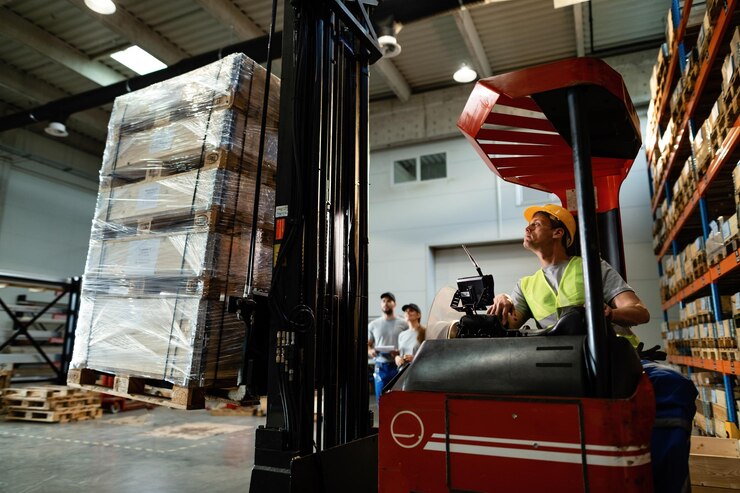
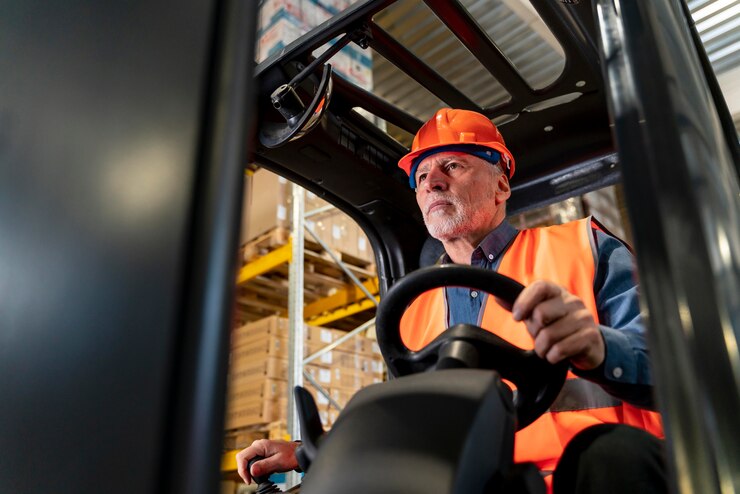
OHS – LIFT TRUCK OPERATOR TRAINING ONLINE COURSE & CERTIFICATION

A lift truck operator is someone trained to safely operate a forklift. They handle the movement of heavy materials within warehouses or industrial spaces, following strict safety and handling guidelines.

The module Lift Truck Operator Training Program provides information on how to safely streamline lift truck operating functions to avoid any harm or damage.

The “Lift Truck Operator Training Program” is fully narrative and delivers productive info on key safety practices and procedures required in typical lift truck operations.

Coming Soon

lift truck operator training

OHS – LIFT TRUCK OPERATOR TRAINING COURSE

The lift truck operator course is developed in accordance with Occupational Health and Safety (OHS) standards to educate individuals on the proper and safe operation of lift trucks, commonly known as forklifts.

IN THIS COURSE, YOU WILL LEARN ABOUT

lift truck operator training

Occupational Health and Safety (OHS) – Lift Truck Operator Training Online Program

The module is AODA-Compliant that gives learners an overview on lift truck operating system. The information presented in this module contains relevant images with precise information.

The best thing is, you can pause the course whenever needed. The course reminder will automatically bookmark where you left off and help you get back to your spot after you return.

Also, there is a final test at the end of the module in the form of MCQs that learners’ have to attempt and pass to ensure successful completion of the lift truck operators’ training program.

Now, let’s have a look at each chapter of the module “Lift Truck Operators’ Training Program”.

WHY IS LIFT TRUCK OPERATOR TRAINING CRUCIAL?

Lift truck operator training is crucial for several reasons, primarily centered around ensuring the safety of both operators and those in the surrounding work environment. Here are key reasons

1. Prevention of Accidents
2. Minimization of Injuries
3. Protection of Equipment and Materials
4. Compliance with Regulations
5. Boost in Workplace Productivity

lift truck operator training

WHO NEEDS LIFT TRUCK OPERATOR TRAINING?

Lift truck operator training is essential for individuals who will be operating forklifts as part of their job responsibilities. This includes: 

Warehouse personnel

Logistics professionals

Anyone involved in material handling tasks using forklifts

LIFT TRUCK OPERATOR TRAINING ONLINE COURSE OUTLINE

The course covers the following topics:

  • 1. LIFT TRUCK OPERATOR - Goals

    Lift Truck Operator Goals refers to the specific objectives and targets set for individuals undergoing training to become proficient lift truck operators. In this chapter, you will learn about the goals that you want your learners to achieve upon completion of the module.

  • 2. LIFT TRUCK OPERATOR - Objectives

    Lift Truck Operator Objectives refer to the specific aims and targets set for individuals undergoing training to become proficient in operating lift trucks, commonly known as forklifts. Learn about the objectives of the module “Lift Truck Operators’ Training Program” to identify the key safety practices and procedures that are required for lift truck operations.

  • 3. Lift Truck Operator Training

    Lift Truck Operator Training refers to a structured educational program designed to equip individuals with the necessary knowledge and skills for the safe and effective operation of lift trucks, commonly known as forklifts. This chapter describes about the theory and practical training of lift truck operators that address information concerning key safety practices and procedures required for proper operation systems.

    This training program meets the standards as set out in the CSA B335-15 safety standard for lift truck.

  • 4. Definitions

    Learn the following definitions that apply to standard CSA B335-15 safety standards:

     1. Approved
    2. Attachment
    3. Boom
    4. Brake-Parking
    5. Brake-Service
    6. Bridge Plate
    7. Capacity
    8. Carriage
    9. Centre Control
    10. Centre of Gravity
    11. Centre of Gravity of a Load
    12. Centre of Gravity of a Loaded Lift Truck
    13. Classification of a Lift Truck
    14. Dock Board
    15. Enclosure – Operator
    16. End Control
    17. Fall Arrest System
    18. Fork
    19. Fork Extension
    20. Fork Height
    21. Lateral Leveling
    22. Lift Truck – Battery Electric
    23. Lift Truck – Counter Balanced
    24. Lift Truck Counter Balanced Front/Side Loader
    25. Lift Truck – Electric
    26. Lift Truck – Fork-lift
    27. Lift Truck – High Lift
    28. Lift Truck – High Lift Order Picker
    29. Lift Truck – High Lift Platform
    30. Lift Truck – Internal Combustion Engine
    31. Lift Truck – Low Lift
    32. Lift Truck – Low Lift Order Picker
    33. Lift Truck – Low Lift Platform
    34. Lift Truck – Motorized Hand
    35. Lift Truck – Motorized Hand/Rider
    36. Lift Truck – Narrow Aisle
    37. Lift Truck – Non Powered
    38. Lift Truck – Operator-Up, High Lift
    39. Lift Truck – Pallet
    40. Lift Truck – Powered
    41. Lift Truck – Reach
    42. Lift Truck – Rider
    43. Lift Truck – Rough Terrain
    44. Lift Truck – Side Loader
    45. Lift Truck – Straddle
    46. Lift Truck – Variable Reach Rough Terrain
    47. Load – Back Rest
    48. Load – Back Rest Extension
    49. Load – Centre
    50. Manufacturer
    51. Mast
    52. Operator
    53. Overhead Guard
    54. Personal Fall Arrest System
    55. Platform – Operator
    56. Platform – Work
    57. Professional Engineer
    58. Rated Capacity
    59. Retractable Stabilizers
    60. Safety Work Surface
    61. Stability Trapezoid
    62. Stability Triangle
    63. Tiering
    64. Tow Tractor
    65. Trainee
    66. Transport Vehicle
    67. Travel Restraint System
    68. User

    All the definitions are presented in a precise manner using relevant images to give learners a clear understanding on each one.

  • 5. Legislation

    In this chapter, you will learn what the ministry of labour, training and skills development are expected to be done.

  • 6. Occupational Health and Safety Act

    This chapter covers details on occupational health and safety act, regulations, and competence. All the information is presented in a brief yet engaging manner to give learners’ a clear glance on the health and safety act.

  • 7. Duties and Obligations

    Duties and Obligations refers to the responsibilities and commitments associated with individuals designated as lift truck operators. Learn about the duties of employers, workers, supervisors, and other persons in this chapter. All the information is presented in the bullet points and in an easy-to-comprehend manner.

  • 8. The Three R’s

    Learn the three rights that as a worker you have in your workplace.

  • 9. Workers’ Rights

    Workers’ Rights refers to the fundamental entitlements and protections afforded to individuals engaged in employment. In this chapter, you will briefly learn about the following:

    1. Right to Know
    2. Right to Participate
    3. Right to Refuse

  • 10. Work Refusal

    Work refusal is the act of an employee choosing not to perform assigned tasks or duties due to a reasonable belief that carrying them out would pose a significant risk to their health and safety. In this chapter, you will learn about the work refusal that are presented in the bullet points to grab the learners’ attention, and to help them meet their preferred learning tactics.

  • 11. Offences

    Offences refer to actions or behaviors that violate established laws, rules, or regulations. This chapter provides informative content about offences using relevant image and followed by occupational health and safety ticketing.

  • 12. Fines

    Fines are monetary penalties imposed as a consequence of violating laws, rules, or regulations. This chapter describes about the ticket carry fines including court costs and other fines along with an example.

  • 13. Policy and Procedures

    Policy and procedures refer to a set of guidelines, rules, and documented processes established by an organization to govern its operations and interactions. Learn about the policy and procedures regarding lift trucks, under the CSA B335-15 standard.

  • 14. Operating Manual

    An operating manual is a comprehensive document that provides detailed instructions, guidelines, and information on how to operate a particular device, machine, system, or process. In this chapter, you will learn about the operating manual that provides instructions on all lift truck operators.

  • 15. Lift Truck Selection Criteria

    Lift truck selection criteria refer to the specific factors and considerations used to choose the most suitable lift truck (or forklift) for a particular application or workplace. In this chapter, you will learn about the lift truck selection criteria that plays a significant role for the selection of trucks in a particular workplace.

    Here, you will learn all the significant selection criteria that are equipped with the given points.

  • 16. Lift Truck Classifications

    Lift truck classifications refer to the categorization of different types of lift trucks or forklifts based on their design, features, and intended use. In this chapter, you will learn about the lift truck classifications that are recognized by the International Industrial Truck Association (IITA).

  • 17. Industrial Trucks

    Industrial trucks are versatile, motorized vehicles designed for material handling and transportation within industrial settings. Learn about the designation, use, maintenance, and operation of industrial trucks. The detailed information regarding industrial trucks has been given.

  • 18. UL Ratings for Lift Trucks

    UL ratings for lift trucks refer to the safety ratings assigned by Underwriters Laboratories (UL) to lift trucks or forklifts. Here, UL ratings for lift trucks are given in the tabular form which includes type, standards, safeguards, and explosion proof.

  • 19. Diesel

    Diesel refers to a type of internal combustion engine fuel derived from crude oil. In this chapter, you will learn various types of diesel powered units that are presented in brief for better comprehension.

  • 20. Electric

    Electric refers to a power source that operates using electricity. Learn various types of electrically powered units that are described in an easy-to-comprehend manner along with relevant and productive information.

  • 21. Gas

    Gas refers to a fuel source commonly used in internal combustion engines. Here, you will learn about the types of G i.e., Type G and Type GS that are gasoline powered units.

  • 22. Liquified Petroleum – Propane

    Liquefied Petroleum Gas (LPG) – Propane refers to a type of fuel commonly used in various applications, including as a power source for lift trucks or forklifts. Learn about the liquified petroleum gas powered units which include Type LP and Type LPS.

  • 23. Duel/Fuel

    Dual fuel refers to a system or vehicle that can operate using two different types of fuel sources. In this chapter, you will learn about Type G/LP and the Type GS/LPS that will operate either on gasoline or liquefied petroleum gas.

  • 24. Trucks for Various Locations

    Trucks for various locations refers to a fleet of trucks or vehicles designed to operate in diverse environments or settings. In this chapter, you will learn the recommended types of trucks for various locations which include the following:

    1. Indoor or Outdoor
    2. Class 1, Division 1
    3. Class 1, Division 2
    4. Class 2, Division 1
    5. Class 2, Division 2
    6. Class 3, Division 1
    7. Class 3, Division 2

  • 25. Markers

    In this chapter, you will learn about various markers that are used to identify types of industrial trucks.

  • 26. Tires

    Tires are the rubber outer coverings mounted on the wheels of vehicles, including lift trucks or forklifts. Learn about the solid tires and pneumatic tires along with relevant images.

  • 27. Section 1 Test

    Now, you will get a test in the form of choosing the correct answer that learners’ have to attempt in order to proceed further with the next part of the training.

  • 28. Components and Controls

    Components and controls refer to the integral parts and operational interfaces of a mechanical system, such as a lift truck or forklift. Learn about the components and controls of lift trucks that you will be operating along with relevant images.

  • 29. Mast/Upright Terminology

    The “mast” or “upright” in lift truck terminology refers to the vertical assembly on the front of the forklift that supports the carriage and forks. Learn about the following mast/upright terms that are presented along with relevant images:

    1. Overall height lowered (OAHL)
    2. Free lift
    3. Overall height raised (OAHR)
    4. Maximum fork height (MFH)

  • 30. Gauges and How They are Read

    Gauges and how they are read refer to the instruments and their reading methods in the dashboard or control panel of a vehicle or equipment, such as a lift truck or forklift. Learn about the following various gauges that are explained briefly in different chapters along with relevant images to give learners’ a clear understanding of the gauges.

    1. Engine hour meter
    2. Fuel gauge
    3. Engine temperature gauge
    4. Amperes gauge
    5. Oil pressure gauge
    6. Battery capacity gauge

  • 31. Lift Truck Controls

    Lift truck controls refer to the various levers, buttons, pedals, and interfaces that operators use to maneuver and operate a lift truck or forklift. In this chapter, you will learn about lift truck control parts that are explained in different chapters using relevant images.

    The lift truck control parts that are explained include:

    1. Steering Wheel
    2. Directional Control
    3. Truck Control
    4. Parking Brake
    5. Hydraulic lift controls
    6. Raise and lower control
    7. Tilt control

  • 32. Lifting System

    The lifting system in the context of a lift truck or forklift refers to the mechanism responsible for raising and lowering the forks or attachment that carries loads. In this chapter, you will learn about the lifting system that is attached to a hydraulic cylinder. All the related information has been shown using relevant images and brief text.

  • 33. Warning and Safety Devices

    Warning and safety devices on a lift truck or forklift refer to the integrated mechanisms and features designed to alert operators and others in the vicinity to potential hazards, as well as to ensure safe operation. This chapter describe about the warning and safety devices which includes warning (strobe) lights, fire extinguisher, and back-up alarm.

    An information is presented in a precise yet engaging manner using appropriate images to give learners’ a clear gist on each safe device.

    Also, learn about the following to enhance the lift truck operators’ training program.

    1. Seat belt
    2. Switches
    3. Keys
    4. Operating Manual
    5. Blind spots
    6. Signaller

    Each and every chapter has been explained in an easy-to-comprehend and retain manner.

  • 34. Pedestrian safety

    Pedestrian safety refers to the measures and practices implemented to protect individuals on foot within a particular environment, such as industrial or warehouse settings. In this chapter, you will learn about the pedestrian safety and the responsibilities of a lift truck operator in keeping visual contact with pedestrians to present any harm or damage, and thereby maintains a safer work environment.

    Also, you can learn about the following:

    1. Dangers of Rear-End Swing
    2. Intersections
    3. Warning Decals
    4. No riders
    5. No lifting
    6. Work platform
    7. No climbing the mast
    8. General safety
    9. Stability
    10. Counter balance
    11. Narrow Aisle
    12. Walkie/Rider
    13. Rear wheel steering
    14. Stability triangle
    15. Lateral stability
    16. Turns
    17. Right angle stacking
    18. Load capacity
    19. Inch-pound equation
    20. Attachment weight
    21. Load centering

  • 35. Section 2 Test

    There is a test in the form of choosing the correct answer that learners’ have to attempt and pass in order to ensure successful completion of above lift truck operators training program.

  • 36. Start-Up

    In this chapter, you will learn the start-up to operate the lift truck efficiently. The instruction points are given in the bullet points to give learners a clear glance on the concept.

  • 37. Travel Speed

    This chapter covers the brief yet productive info on how to maintain a travel speed of a lift truck. The information is presented in an easy-to-comprehend manner that give learners an accurate knowledge about travel speed of a lift truck.

  • 38. Stopping Distance

    In this chapter, you will learn about the stopping distance along with its formula and graphical representation.

  • 39. Picking Up Loads

    Learn about the great ways of picking up load safely and efficiently to avoid any damage or harm. All the instructed points on picking up load are mentioned in the bullet points in an easy-to-comprehend and concise manner.

    Also, learn about the following:

    1. Centre your loads
    2. Tilting
    3. Running a load
    4. Picking up ribbed drums
    5. Picking up round objects

  • 40. Loose Loads

    Learn how carrying the loose loads can damage the load, your truck, pedestrians or yourself.

  • 41. Transporting Loads

    Learn about transporting loads that have been explained in an eye-catch and easy-to-understand manner along with an image.

  • 42. Changing Direction

    In this chapter, you will learn about the following:

    1. Electric Trucks – Plugging
    2. Internal Combustion

  • 43. Overhead Hazards

    Overhead hazards refer to potential dangers or risks present above ground level within a specific environment. In this chapter, you will learn about the overhead hazards and how it is important to watch for overhead obstructions such as beams and cables.

  • 44. Chain Slack

    Chain slack refers to the excessive looseness or sagging in a chain, typically part of a mechanical system or equipment. Learn about chain slack along with relevant image and a brief description.

  • 45. Stacking

    Stacking refers to the process of arranging objects or items vertically in layers, typically one on top of another, to create a stable and organized structure. This chapter briefly covers about the positioning of load along with appropriate images and concise yet production information.

    Also, learn about the following which play a significant role in lift truck operator training program:

    1. Wide and long loads
    2. Ramps and inclines
    3. Driving on various surfaces
    4. Railroad tracks and rough terrain/Pot Holes
    5. Elevators
    6. Loading Docks
    7. Loading and unloading railroad cars
    8. Material handling
    9. Lift truck attachments
    10. Attachments
    11. Parking
    12. Pre-start inspections
    13. Daily inspections for all lift trucks
    14. Daily inspection for combustion engine lift trucks
    15. Daily inspection for battery powered lift trucks
    16. Counter balance lift trucks
    17. Walkie/Rider pallet truck
    18. Narrow Aisle reach truck
    19. Swing reach truck
    20. Side-loader
    21. Side-loader basic configuration
    22. Storage racking systems

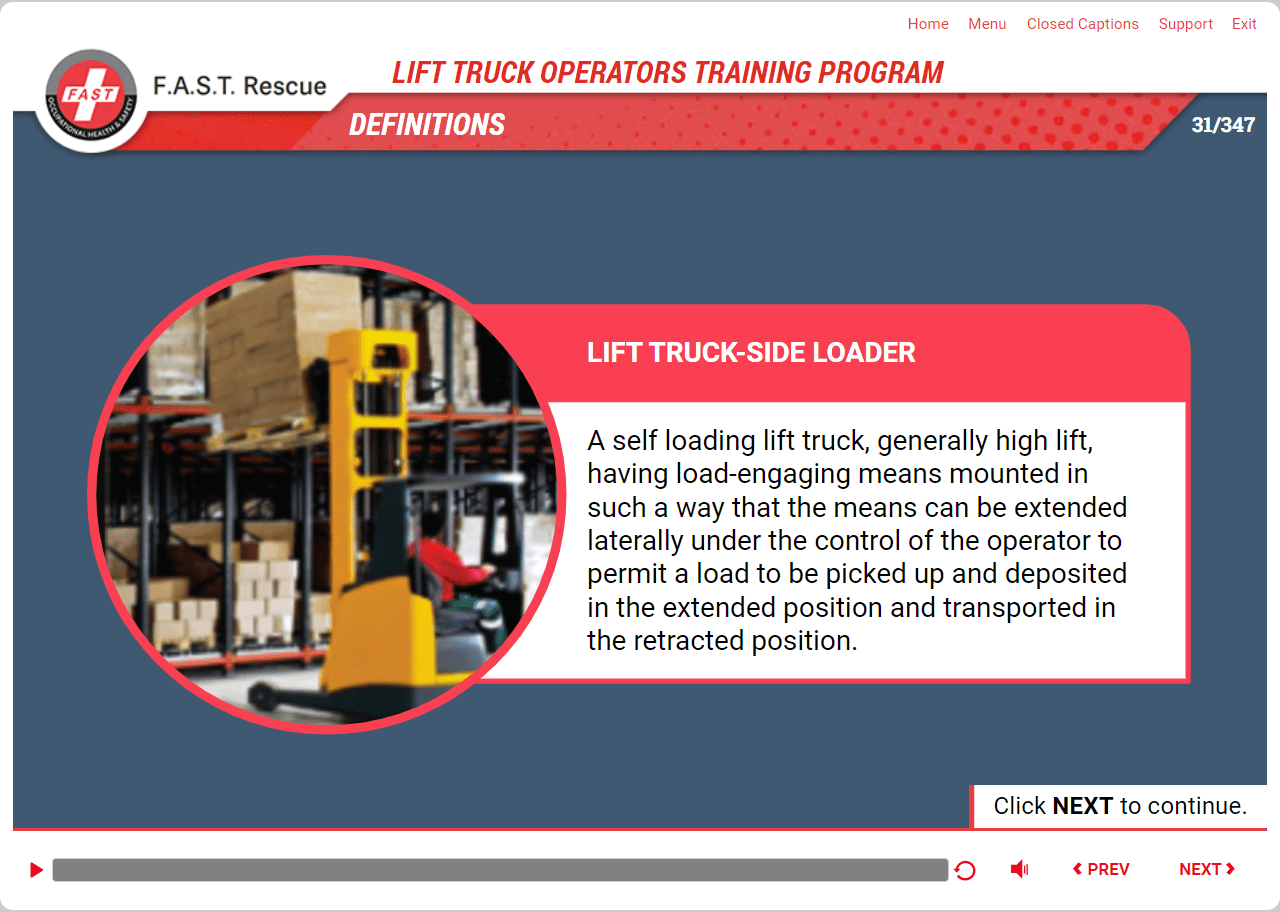
    All the above chapters are explained in a very easy-to-understand and retain manner using most appropriate and relevant images.

    Also, diagrammatic representations along with label parts are provided for counter balance lift truck, walkie/rider pallet truck, narrow aisle reach truck, swing reach truck, side-loader basic configuration, etc.

  • 46. Section 3 Test

    There is a test in the form of choosing the correct answers that learners have to attempt and pass to ensure that they have fully comprehended the above chapters.

  • 47. How to Read a Data Plate

    In this chapter, you will learn how to read a data plate where each of its identification has been labelled and presented in a descriptive manner.

    The identification parts that are included and described in different chapters include the following:

    1. Model number
    2. Serial number
    3. Type of truck
    4. Attachments
    5. Capacity
    6. Load centre
    7. Lift height (Maximum fork height)
    8. Lift truck weight
    9. Battery weight
    10. Ampere hours
    11. Battery number or type
    12. Volts

  • 48. Battery Power and Electric Lift Trucks

    In this chapter, you will learn about the following:

    1. Weight
    2. Acid
    3. Electrical
    4. Explosive fumes

  • 49. Battery Construction

    Here, learn about the construction of battery along with its labelled diagram.

  • 50. Battery Charging

    All the most accurate information regarding battery charging has been provided with relevant images.

  • 51. Battery Removal

    Learn about the following in the chapter “Battery Removal”:

    1. Battery removal with hoist
    2. Battery removal with roll outs

  • 52. Discharge Metre/ Lift Interrupt

    In this chapter, you will learn the purpose of discharge metre/lift interrupt that helps to monitor and protect the battery and electrical components of the lift truck.

  • 53. Caution

    Learn the cautions that are presented in the form of points to avoid damage or harm. The information is given along with relevant images and an easy-to-comprehend text.

    In this chapter, you will learn about the following:

    1. Cylinder exchange
    2. Cylinder storage
    3. Safe procedures
    4. Gas and diesel lift trucks

  • 54. Final Test

    At the end of the module, you will have the final test in the form of choosing the correct answers. The successful completion of the training indicates that you have effectively completed the training with greatest knowledge retention.

WHAT YOU WILL GET

lift truck operator training
  • COMING SOON

  • Course Duration 300 Minutes approximately

  • You can make as many attempts as you need to pass the exam; there is no limit

  • Your certificate is valid for 3 years from the date of issue

  • Phone, email and chat on weekdays from 8am – 5pm EST

  • SELF-PACED/ELEARNING

  • RECORD OF TRAINING

  • USER MANAGEMENT

  • INSTANT ACCESS

  • MOBILE FRIENDLY

  • CERTIFICATE

CONTACT US

1 + 3 = ?

OHS – LIFT TRUCK OPERATOR TRAINING COURSE CERTIFICATION

After completing the training program, you will receive certification as an OHS Lift Truck Operator under OHS regulations.

WHY CHOOSE OUR CUSTOM ELEARNING SERVICES FOR LIFT TRUCK OPERATOR TRAINING? 

Custom eLearning services are personalized and tailored online learning solutions designed to meet the specific needs and requirements of an organization. 

Our custom eLearning services ensures a tailored, engaging, and compliant training program. 

1. Tailored Approach: Addresses specific job environments for effective training.

2. Engaging Learning: Interactive content for better engagement.

3. Compliance Assurance: Covers regulatory requirements for a safer workplace.

4. Flexibility and Accessibility: Adaptable learning paths based on individual progress.

5. Efficiency and Savings: Cost-effective compared to traditional methods.

Frequently Asked Questions (FAQs)

Lift truck operator training is a comprehensive program designed to educate individuals on the safe and efficient operation of forklifts and other industrial lift trucks.

No, it is not advisable. Operating a forklift without proper training is not only unsafe but may also violate workplace safety regulations.

Lift truck operator training is crucial for preventing accidents, ensuring workplace safety, and complying with regulations.

Employers are typically responsible for providing lift truck operator training to their employees.

A Lift Truck Operator, commonly known as a forklift operator, is a skilled professional responsible for operating and maneuvering lift trucks or forklifts in various industrial settings.

Certification for Lift Truck Operators is crucial to ensure the safety of both the operator and those working in the vicinity.

Lift truck operator training is required before an individual operates a forklift in the workplace.

Yes, lift truck operator training can be customized to address the unique requirements of different workplaces. Through our custom e-learning solutions, we make sure that operators receive training in scenarios and conditions that are directly applicable to their individual job environments.