SPILL RESPONSE TRAINING ONLINE COURSE AND CERTIFICATION

Spill response is the process of quickly and effectively managing and mitigating the impact of a spill, whether it be oil, chemicals, or hazardous waste, on the environment and human health. Spills can occur in a variety of settings, including industrial sites, transportation systems, and natural disasters, and can have significant consequences for the environment and public health.

Coming Soon

spill response

IN THIS COURSE, YOU WILL LEARN ABOUT

Occupational Health and Safety (OHS) – Online Spill Response

Once you start the course, you can pause it as needed. The course will automatically bookmark and you can resume it where you left off.

The course is fully narrative and AODA compliant. The topics are explained in detail, represented by relevant images and activities to confirm understanding.

At the end of the module, there is a final test to gauge learners understanding.

SPILL RESPONSE TRAINING COURSE OUTLINE

WHAT YOU WILL GET

  • 1. Legislation

    Spill response falls under three different bodies of legislation:

    • Occupational Health and Safety Act
    • Environmental Protection Act
    • Ontario Fire Code
  • 2. Ministry of the Environment

    The Ministry of the Environment has established a standard definition for a minor spill. According to this definition, a minor spill is an event where the magnitude and nature of the spill are not significant enough to cause significant adverse effects or public concerns.

    In such cases, the spiller is expected to utilize their own resources to undertake the necessary measures to control, contain, and clean up the material spilled.

    This definition provides a clear guideline for businesses and organizations to determine whether a spill is considered minor or not. In case of a minor spill, the spiller is expected to take immediate action to manage and mitigate the spill.

    This may involve using appropriate equipment and resources, such as spill kits and absorbent materials, to contain and clean up the spill. By defining a minor spill, the Ministry of the Environment aims to promote prompt and effective spill response, which can help to minimize the impact of spills on the environment and public health.

  • 3. Spills

    There are 2 types of spills:

    • Simple/Minor spills
    • Serious/Complex spills
  • 4. Classification

    Learn about various classifications mentioned in the chapter.

  • 5. Characteristics

    Learn the seven characteristics listed in this section.

  • 6. Spill Response Program

    Spill Response Program discusses about the following things:

    • Emergency Preparedness
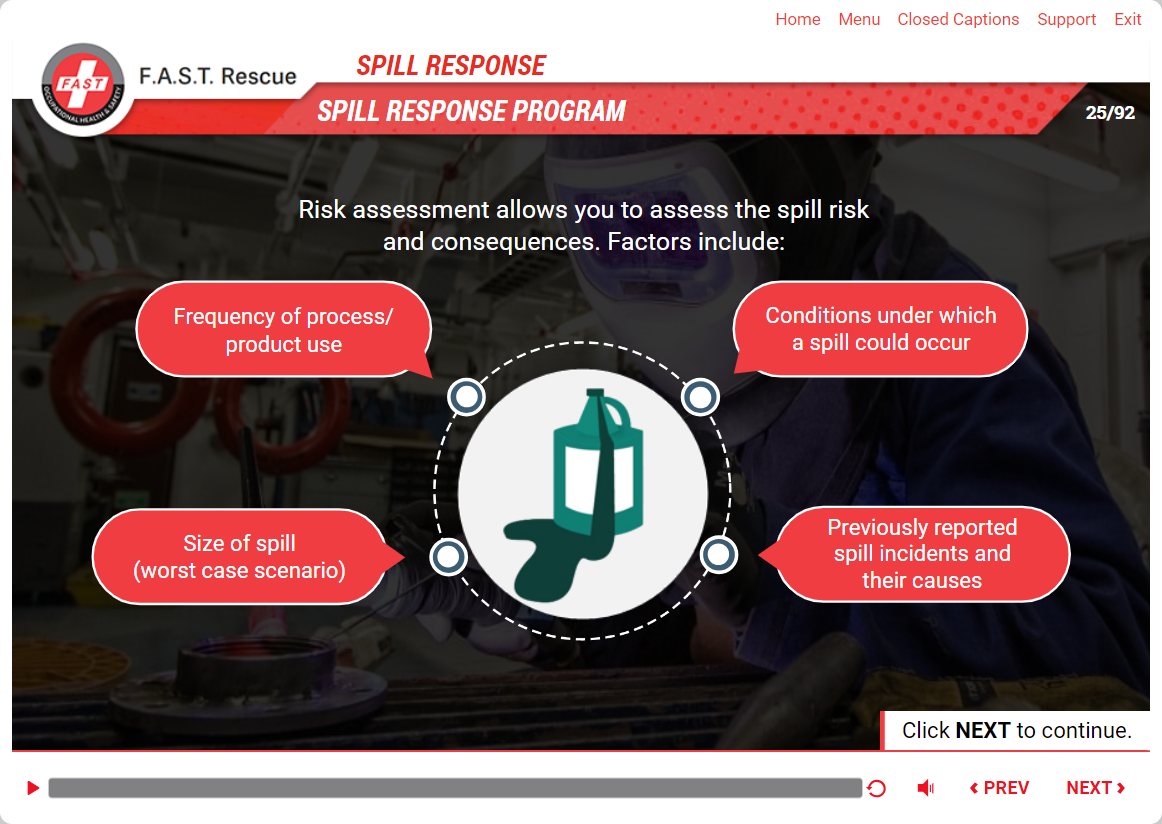
    • Risk Assessment
    • Contingency Plans
    • Response
  • 7. Response to Minor Spill

    When responding to a spill, it is essential that all workers involved in the clean-up process are comfortable handling the hazardous material and the clean-up process.

    This means that workers should have the necessary knowledge and skills to safely manage and contain the spill.

    If a worker is unfamiliar with the material or is unsure what the spilled material is, they should not attempt to contain the spill. This is because attempting to manage a spill without proper knowledge and equipment can result in further damage and harm to the environment and public health.

  • 8. After the Clean-up

    To ensure the safety of workers and the surrounding environment, it is essential to conduct regular inspections of areas where hazardous materials are stored or handled. This can include warehouses, storage facilities, and manufacturing plants where chemicals, fuels, and other hazardous materials are stored or used.

    During the inspection, specific attention should be given to areas where hazardous materials are stored or handled.

    This may include reviewing material safety data sheets (MSDS) to ensure that the proper precautions and procedures are being followed, checking for proper labelling and storage of hazardous materials, and reviewing spill response plans and procedures to ensure that they are up to date and effective.

  • COMING SOON

  • Course Duration 150 minutes approximately

  • YOU CAN MAKE AS MANY ATTEMPTS AS YOU NEED TO PASS THE EXAM; THERE IS NO LIMIT

  • Your certificate is valid for 3 years from the date of issue

  • Phone, email and chat on weekdays from 8am – 5pm EST

  • SELF-PACED/ELEARNING

  • Record of Training

  • USER MANAGEMENT

  • INSTANT ACCESS

  • MOBILE FRIENDLY

  • Certificate

CONTACT US

eyJpZCI6IjI4IiwibGFiZWwiOiJDb250YWN0IFBhZ2UgMjAyMiIsImFjdGl2ZSI6IjEiLCJvcmlnaW5hbF9pZCI6IjQiLCJ1bmlxdWVfaWQiOiJ2Ym4yM2EiLCJwYXJhbXMiOnsiZW5hYmxlRm9yTWVtYmVyc2hpcCI6IjAiLCJ0cGwiOnsid2lkdGgiOiIxMDAiLCJ3aWR0aF9tZWFzdXJlIjoiJSIsImJnX3R5cGVfMCI6Im5vbmUiLCJiZ19pbWdfMCI6IiIsImJnX2NvbG9yXzAiOiIjY2RjZGNkIiwiYmdfdHlwZV8xIjoiY29sb3IiLCJiZ19pbWdfMSI6IiIsImJnX2NvbG9yXzEiOiIjMzNhYjU1IiwiYmdfdHlwZV8yIjoiY29sb3IiLCJiZ19pbWdfMiI6IiIsImJnX2NvbG9yXzIiOiIjMzJhMzUwIiwiYmdfdHlwZV8zIjoiY29sb3IiLCJiZ19pbWdfMyI6IiIsImJnX2NvbG9yXzMiOiIjMzJhMzUwIiwiZmllbGRfZXJyb3JfaW52YWxpZCI6IiIsImZvcm1fc2VudF9tc2ciOiJUaGFuayB5b3UgZm9yIGNvbnRhY3RpbmcgdXMhIiwiZm9ybV9zZW50X21zZ19jb2xvciI6IiMzMmEzNTAiLCJoaWRlX29uX3N1Ym1pdCI6IjEiLCJyZWRpcmVjdF9vbl9zdWJtaXQiOiJodHRwczpcL1wvd3d3LnN3aWZ0ZWxlYXJuaW5nc2VydmljZXMuY29tXC90aGFua3lvdVwvIiwiZW1haWxfZm9ybV9kYXRhX2FzX3RibCI6IjEiLCJ0ZXN0X2VtYWlsIjoic3VwcG9ydEBzd2lmdGVsZWFybmluZ3NlcnZpY2VzLmNvbSIsInNhdmVfY29udGFjdHMiOiIxIiwiZXhwX2RlbGltIjoiOyIsImZiX2NvbnZlcnRfYmFzZSI6IiIsImZpZWxkX3dyYXBwZXIiOiI8ZGl2IGZpZWxkX3NoZWxsX2NsYXNzZXMgZmllbGRfc2hlbGxfc3R5bGVzPltmaWVsZF08XC9kaXY+In0sImZpZWxkcyI6W3siYnNfY2xhc3NfaWQiOiI2IiwibmFtZSI6ImZpcnN0X25hbWUiLCJsYWJlbCI6IiIsInBsYWNlaG9sZGVyIjoiRmlyc3QgTmFtZSIsInZhbHVlIjoiIiwidmFsdWVfcHJlc2V0IjoiIiwiaHRtbCI6InRleHQiLCJtYW5kYXRvcnkiOiIxIiwibWluX3NpemUiOiIiLCJtYXhfc2l6ZSI6IiIsImFkZF9jbGFzc2VzIjoiIiwiYWRkX3N0eWxlcyI6IiIsImFkZF9hdHRyIjoic3R5bGU9XCJ0ZXh0LWNvbG9yOiAjMzMzXCIiLCJ2bl9vbmx5X251bWJlciI6IjAiLCJ2bl9vbmx5X2xldHRlcnMiOiIwIiwidm5fcGF0dGVybiI6IjAiLCJ2bl9lcXVhbCI6IiIsImljb25fY2xhc3MiOiIiLCJpY29uX3NpemUiOiIiLCJpY29uX2NvbG9yIjoiIiwidGVybXMiOiIifSx7ImJzX2NsYXNzX2lkIjoiNiIsIm5hbWUiOiJsYXN0X25hbWUiLCJsYWJlbCI6IiIsInBsYWNlaG9sZGVyIjoiTGFzdCBOYW1lIiwidmFsdWUiOiIiLCJodG1sIjoidGV4dCIsIm1hbmRhdG9yeSI6IjAiLCJtaW5fc2l6ZSI6IiIsIm1heF9zaXplIjoiIiwiYWRkX2NsYXNzZXMiOiIiLCJhZGRfc3R5bGVzIjoiIiwiYWRkX2F0dHIiOiIiLCJ2bl9vbmx5X251bWJlciI6IjAiLCJ2bl9vbmx5X2xldHRlcnMiOiIwIiwidm5fcGF0dGVybiI6IjAifSx7ImJzX2NsYXNzX2lkIjoiMTIiLCJuYW1lIjoiZW1haWwiLCJsYWJlbCI6IiIsInBsYWNlaG9sZGVyIjoiRW1haWwiLCJ2YWx1ZSI6IiIsImh0bWwiOiJlbWFpbCIsIm1hbmRhdG9yeSI6IjEiLCJtaW5fc2l6ZSI6IiIsIm1heF9zaXplIjoiIiwiYWRkX2NsYXNzZXMiOiIiLCJhZGRfc3R5bGVzIjoiIiwiYWRkX2F0dHIiOiIiLCJ2bl9vbmx5X251bWJlciI6IjAiLCJ2bl9vbmx5X2xldHRlcnMiOiIwIiwidm5fcGF0dGVybiI6IjAifSx7ImJzX2NsYXNzX2lkIjoiMTIiLCJuYW1lIjoiUGhvbmVOdW1iZXIiLCJsYWJlbCI6IlBob25lIE51bWJlcjYiLCJwbGFjZWhvbGRlciI6IlBob25lIE51bWJlcjYiLCJ2YWx1ZSI6IiIsInZhbHVlX3ByZXNldCI6IiIsImh0bWwiOiJ0ZXh0IiwibWFuZGF0b3J5IjoiMCIsIm1pbl9zaXplIjoiMyIsIm1heF9zaXplIjoiMjAiLCJhZGRfY2xhc3NlcyI6IiIsImFkZF9zdHlsZXMiOiIiLCJhZGRfYXR0ciI6IiIsInZuX29ubHlfbnVtYmVyIjoiMCIsInZuX29ubHlfbGV0dGVycyI6IjAiLCJ2bl9wYXR0ZXJuIjoiIiwidm5fZXF1YWwiOiIiLCJpY29uX2NsYXNzIjoiIiwiaWNvbl9zaXplIjoiIiwiaWNvbl9jb2xvciI6IiIsInRlcm1zIjoiIn0seyJic19jbGFzc19pZCI6IjEyIiwibmFtZSI6InN1YmplY3QiLCJsYWJlbCI6IiIsInBsYWNlaG9sZGVyIjoiU3ViamVjdCIsInZhbHVlIjoiIiwidmFsdWVfcHJlc2V0IjoiIiwiaHRtbCI6InRleHQiLCJtYW5kYXRvcnkiOiIxIiwibWluX3NpemUiOiIiLCJtYXhfc2l6ZSI6IiIsImFkZF9jbGFzc2VzIjoiIiwiYWRkX3N0eWxlcyI6IiIsImFkZF9hdHRyIjoiIiwidm5fb25seV9udW1iZXIiOiIwIiwidm5fb25seV9sZXR0ZXJzIjoiMCIsInZuX3BhdHRlcm4iOiIiLCJ2bl9lcXVhbCI6IiIsImljb25fY2xhc3MiOiIiLCJpY29uX3NpemUiOiIiLCJpY29uX2NvbG9yIjoiIiwidGVybXMiOiIifSx7ImJzX2NsYXNzX2lkIjoiMTIiLCJuYW1lIjoibWVzc2FnZSIsImxhYmVsIjoiIiwicGxhY2Vob2xkZXIiOiJQbGVhc2Ugc2hhcmUgeW91ciByZXF1aXJlbWVudHMiLCJ2YWx1ZSI6IiIsInZhbHVlX3ByZXNldCI6IiIsImh0bWwiOiJ0ZXh0YXJlYSIsIm1hbmRhdG9yeSI6IjEiLCJtaW5fc2l6ZSI6IiIsIm1heF9zaXplIjoiIiwiYWRkX2NsYXNzZXMiOiIiLCJhZGRfc3R5bGVzIjoiIiwiYWRkX2F0dHIiOiIiLCJ2bl9vbmx5X251bWJlciI6IjAiLCJ2bl9vbmx5X2xldHRlcnMiOiIwIiwidm5fcGF0dGVybiI6IjAiLCJ2bl9lcXVhbCI6IiIsImljb25fY2xhc3MiOiIiLCJpY29uX3NpemUiOiIiLCJpY29uX2NvbG9yIjoiIiwidGVybXMiOiIifSx7ImJzX2NsYXNzX2lkIjoiMTIiLCJuYW1lIjoicmVDQVBUQ0hBIiwibGFiZWwiOiJyZUNBUFRDSEEiLCJodG1sIjoicmVjYXB0Y2hhIiwidGVybXMiOiIiLCJyZWNhcC10aGVtZSI6ImxpZ2h0IiwicmVjYXAtdHlwZSI6ImF1ZGlvIiwicmVjYXAtc2l6ZSI6Im5vcm1hbCJ9LHsiYnNfY2xhc3NfaWQiOiIxMiIsIm5hbWUiOiJTdWJtaXQiLCJsYWJlbCI6IlN1Ym1pdCIsImh0bWwiOiJzdWJtaXQiLCJhZGRfY2xhc3NlcyI6IiIsImFkZF9zdHlsZXMiOiIiLCJhZGRfYXR0ciI6InN0eWxlPVwiYmFja2dyb3VuZC1jb2xvcjogIzM4NzhiMzsgY29sb3I6ICNmZmZcIiIsImljb25fY2xhc3MiOiIiLCJpY29uX3NpemUiOiIiLCJpY29uX2NvbG9yIjoiIiwidGVybXMiOiIifV0sIm9wdHNfYXR0cnMiOnsiYmdfbnVtYmVyIjoiNCJ9fSwiaW1nX3ByZXZpZXciOiJzaW1wbGUtd2hpdGUucG5nIiwidmlld3MiOiI1MzIyMyIsInVuaXF1ZV92aWV3cyI6IjM3MTE0IiwiYWN0aW9ucyI6IjExNjMiLCJzb3J0X29yZGVyIjoiNCIsImlzX3BybyI6IjAiLCJhYl9pZCI6IjAiLCJkYXRlX2NyZWF0ZWQiOiIyMDIyLTA5LTEwIDA3OjIwOjQ3IiwiaW1nX3ByZXZpZXdfdXJsIjoiaHR0cHM6XC9cL3d3dy5zd2lmdGVsZWFybmluZ3NlcnZpY2VzLmNvbVwvd3AtY29udGVudFwvcGx1Z2luc1wvY29udGFjdC1mb3JtLWJ5LXN1cHN5c3RpY1wvYXNzZXRzXC9mb3Jtc1wvaW1nXC9wcmV2aWV3XC9zaW1wbGUtd2hpdGUucG5nIiwidmlld19pZCI6IjI4Xzk3NzYwNSIsInZpZXdfaHRtbF9pZCI6ImNzcEZvcm1TaGVsbF8yOF85Nzc2MDUiLCJjb25uZWN0X2hhc2giOiJkNGJiNGFmODM5ZWUyOGYxZmY5MGUxNTJkM2RkMGFhMiJ9

Frequently Asked Questions (FAQs)

Spill response is the process of quickly and effectively managing and mitigating the impact of a spill, whether it is oil, chemical, or hazardous waste, on the environment and human health.

The first priority in spill response is to ensure the safety of people in the area. This may involve evacuating the area or establishing a perimeter to prevent exposure to the spill. Once safety is ensured, the next step is to assess the situation and determine the type and severity of the spill, as well as the potential hazards to the environment and human health.

Containment is a critical component of spill response, and typically involves using physical barriers such as booms or absorbent materials to prevent the spread of the spill.

Clean-up techniques for spills may include vacuuming, skimming, or using absorbent materials. The appropriate technique will depend on the type of spill and the extent of the damage.

Documentation is important for regulatory compliance, insurance claims, and legal proceedings. It allows for a clear record of the spill response process, including the cause of the spill, the extent of the damage, and the clean-up procedures used.

The goal of spill response is to minimize the impact of the spill on the environment and human health, and to restore the affected area to its pre-spill condition as quickly and safely as possible.

Spill prevention strategies may include spill prevention plans, spill kits, and spill response training. The goal is to minimize the risk of spills occurring in the first place.

Effective communication and teamwork are critical in spill response to ensure that everyone involved understands their role and can work together to minimize the impact of the spill. This includes assigning roles, coordinating actions, and communicating with stakeholders.