OHS – PREVENTING BACK INJURIES AND MUSCULOSKELETAL DISORDERS (MSD) TRAINING ONLINE COURSE AND CERTIFICATION

Back injuries harm the spine through trauma or strain, impacting vertebrae and discs. Musculoskeletal Disorders (MSD) affect muscles, bones, tendons, and joints, often due to factors like repetitive movements or poor ergonomics.

Regular and efficient committee meetings are crucial for the success of the JHSC. The meetings are held to discuss and recommend solutions for safety and health concerns in the workplace.

$55.37 / BUY NOW GET A QUOTE FOR TEAM
preventing back injuries

Please feel free to contact us for group enrollments in our courses! You can email us at [email protected].

OHS – PREVENTING BACK INJURIES AND MUSCULOSKELETAL DISORDERS (MSD) TRAINING COURSE

The Preventing Back Injuries and Musculoskeletal Disorders (MSD) Training Course is developed in accordance with Occupational Health and Safety (OHS) standards. It aims to teach individuals how to safeguard themselves from injuries related to the back and the musculoskeletal Disorders (MSD) in the workplace.

IN THIS COURSE, YOU WILL LEARN ABOUT

preventing back injuries and musculoskeletal disorders

Occupational Health and Safety (OHS) – Online Preventing Back Injuries And Musculoskeletal Disorders/Injuries

Once you start the course, you can pause it as needed. The course will automatically bookmark and you can resume it where you left off.

The course is fully narrative and AODA compliant. The topics are explained in detail, represented by relevant images and activities to confirm understanding.

At the end of the module, there is a final test to gauge learners understanding.

$55.37 / BUY NOW

WHY IS BACK INJURIES AND MUSCULOSKELETAL DISORDERS (MSD) TRAINING IMPORTANT?

Back Injuries and Musculoskeletal Disorders (MSD) Training is important for several reasons:

1. Reduces workplace injuries through education on proper ergonomics and lifting techniques.

2. Promotes employee well-being by addressing risks linked to poor posture and repetitive movements.

3. Enhances workplace productivity through increased awareness and active mitigation of factors causing back injuries and Musculoskeletal Disorders (MSD).

preventing back injuries and musculoskeletal disorders

WHO SHOULD UNDERGO BACK INJURIES AND MUSCULOSKELETAL DISORDERS (MSD) TRAINING?

Employees across various industries, especially those involved in physically demanding tasks, should undergo Back Injuries and Musculoskeletal Disorders (MSD) Training. This includes: 

Employees involved in manual handling tasks

Individuals working in repetitive motion jobs

Employers looking to create a safer work environment for their staff

$55.37 / BUY NOW

PREVENTING BACK INJURIES AND MUSCULOSKELETAL DISORDERS/INJURIES TRAINING COURSE OUTLINE

  • 1. Injuries

    Injuries are harm or damage inflicted on the body, often resulting from accidents, falls, impacts, or other harmful events. Acute or immediate injuries to the back can be caused by tearing or straining ligaments and muscles.

  • 2. Preventing Injury

    Preventing injury involves taking proactive measures and precautions to avoid harm or damage to the body. The best way to prevent back injuries is to develop habits that reduce the strain placed on the back.

  • 3. Avoid Lifting and Bending Whenever You Can

    Learn how to avoid lifting and bending whenever you can.

  • 4. Use Proper Lifting Techniques

    Learn the proper lifting techniques ways in this chapter.

  • 5. How to Prevent Back Pain

    Prevent back pain: maintain posture, exercise, lift correctly, use ergonomics, take breaks, manage weight, choose a good mattress, avoid smoking, stay hydrated, and manage stress. Use the correct lifting and moving techniques and other tips that are mentioned in the chapter to prevent back pain.

  • 6. Ergonomics and Musculoskeletal Disorders (MSD)

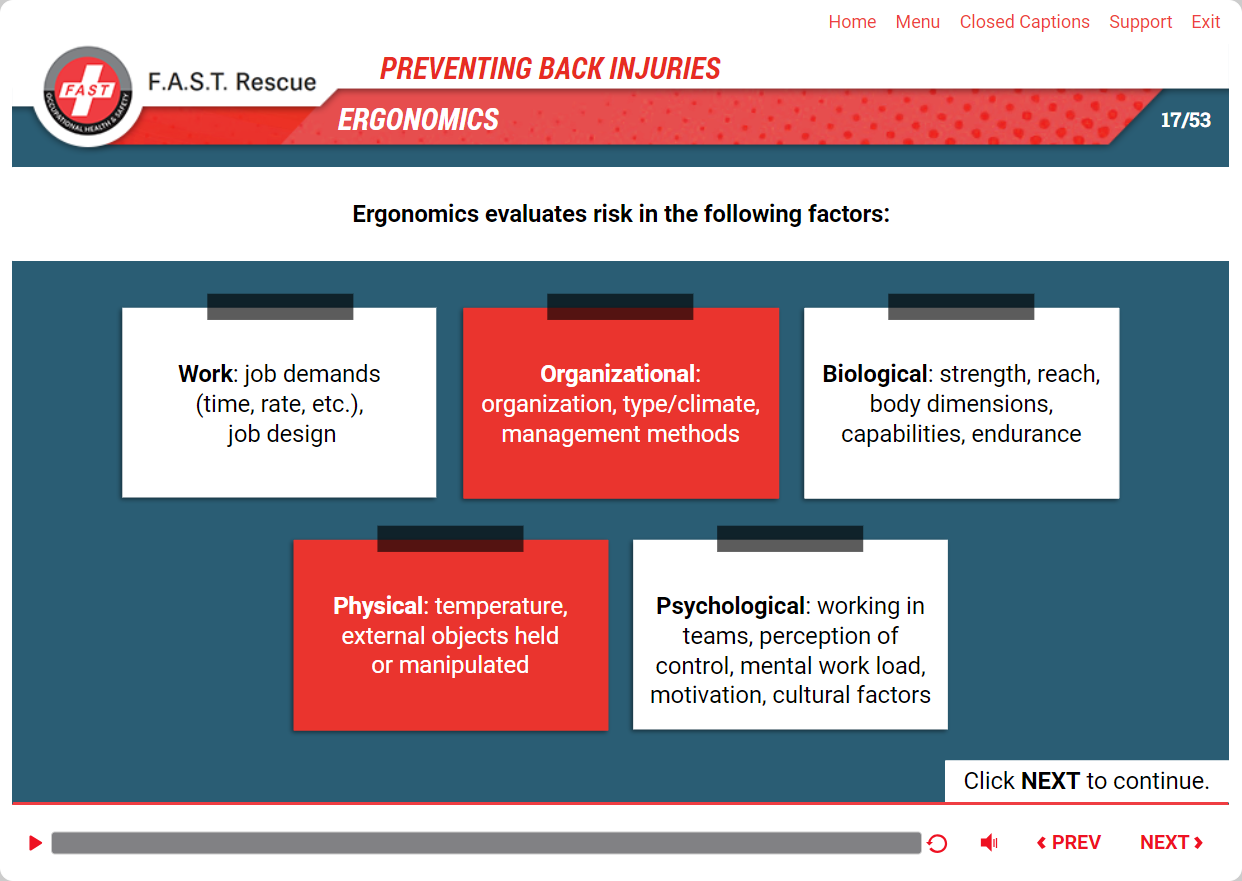
    Ergonomics involves designing and arranging workplaces or products to suit the capabilities and comfort of individuals, aiming to enhance efficiency and well-being. Learn briefly about ergonomics, risk factors that ergonomics evaluate, and musculoskeletal disorders.

  • 7. Musculoskeletal Disorders

    Musculoskeletal disorders (MSD) are health conditions that affect the muscles, bones, tendons, ligaments, and other components of the body’s musculoskeletal system. 

    1. What is a Musculoskeletal Disorder (MSD)?

    A Musculoskeletal Disorder (MSD) is a condition affecting muscles, bones, and related structures, often causing pain and limited movement. Examples include arthritis and back pain.

    2. Types of Musculoskeletal Disorders

    Various types of Musculoskeletal Disorders (MSDs) include conditions like arthritis, osteoporosis, and back pain, each affecting different parts of the body’s musculoskeletal system.

    Apart from it, also learn about the following in this course:

    1. Mechanism of Injury: The mechanism of injury refers to how an injury occurs, outlining the specific actions, forces, or events that lead to harm or damage to the body.

    2. Ergonomic Hazards: Ergonomic hazards are conditions in the workplace that can lead to physical discomfort, strain, or injuries due to factors like poor posture, repetitive movements, or uncomfortable workstations.

    3. Other Factors: Other factors are additional elements or considerations that contribute to a situation, even though they may not be explicitly mentioned.

    4. Warning Signs: Warning signs are indications or signals that alert individuals to potential dangers, issues, or situations that require attention.
  • 8. Stages of Injury

    Stages of injury describe the various phases an injury goes through, from the moment it happens to the recovery process. The stages of injury are categorized into three stages – stage 1, 2, and 3.

  • 9. Assessing the Workplace

    Assessing the workplace means evaluating conditions to identify and address potential risks for the safety and well-being of employees. Assessing the workplace is an important step in preventing workplace injuries, particularly those related to musculoskeletal disorders.

    One critical aspect of this assessment is including the workers themselves in the process. Workers have first-hand knowledge of their job requirements and can identify areas that cause pain, discomfort, fatigue, or frustration.

    By including workers in the assessment process, their expertise can be utilized to identify potential hazards and implement solutions to improve workplace safety and prevent injuries.

    Ultimately, involving workers in the assessment process can help create a safer and healthier work environment for everyone.

  • 10. Types of Controls

    1. Engineering
    2. Administrative
    3. Personal Protective Equipment (PPE)

  • 11. Tips for Prevention

    Learn the various prevention tips such as exercising daily, balanced lifestyle, etc., to prevent back injuries.

  • 12. Summary

    Some effective ways to prevent back injuries include maintaining proper posture, avoiding heavy lifting, staying active and exercising regularly, using proper lifting techniques, and stretching before physical activity. It is also important to assess the workplace and involve workers in identifying potential hazards and implementing solutions to improve workplace safety. If you experience back pain, it’s important to rest and avoid activities that aggravate the pain, apply ice to the affected area, and seek medical attention if the pain persists or is severe. By taking proactive steps to prevent back injuries, individuals can maintain good back health and improve their overall quality of life.

  • 13. Final Test

    The final test evaluates learners understanding and knowledge gained from the training. It includes questions on the roles and responsibilities of the committee members, meeting procedures, safety regulations and standards, and emergency response protocols.
    The test may be in the form of multiple-choice questions, or choosing the correct answers. The final test is essential to ensure that the learners have comprehended the training’s key concepts and can apply them in the workplace.

WHAT YOU WILL GET

preventing back injuries and musculoskeletal disorders
  • $55.37/person

  • Course Duration 30 minutes approximately

  • YOU CAN MAKE AS MANY ATTEMPTS AS YOU NEED TO PASS THE EXAM; THERE IS NO LIMIT

  • Your certificate is valid for 3 years from the date of issue

  • Phone, email and chat on weekdays from 8am – 5pm EST

  • SELF-PACED/ELEARNING

  • Record of Training

  • USER MANAGEMENT

  • INSTANT ACCESS

  • MOBILE FRIENDLY

  • Certificate

CONTACT US

2 + 3 = ?

WHY CHOOSE OUR CUSTOM ELEARNING SOLUTIONS FOR BACK INJURIES AND MUSCULOSKELETAL DISORDERS (MSD) TRAINING? 

Custom eLearning solutions are personalized online courses, specifically tailored to meet your organization’s needs, providing flexible and interactive training for your workforce.

Our custom eLearning solutions for back injuries and musculoskeletal disorders (MSD) training offers several benefits. Our tailored programs provide:

1. Personalization: Our eLearning solutions are customized to meet the specific needs of your organization, ensuring relevance and effectiveness in addressing back injuries and MSD concerns.

2. Engaging Content: We design interactive and engaging content to enhance the learning experience, making it more enjoyable and effective for participants.

3. Cost-Effectiveness: Our eLearning solutions offer a cost-effective alternative to traditional training methods, reducing expenses associated with in-person sessions and materials.

OHS – PREVENTING BACK INJURIES AND MUSCULOSKELETAL DISORDERS (MSD) TRAINING COURSE CERTIFICATION

After completing the training program, you will receive a certification for OHS – Preventing Back Injuries and Musculoskeletal Disorders (MSD) under OHS regulations. 

$55.37 / BUY NOW

Frequently Asked Questions (FAQs)

Back injuries can result from various factors, including poor posture, heavy lifting, and sudden movements.

The primary focus of Back Injuries and Musculoskeletal Disorders (MSD) Training is to educate individuals on preventing and managing injuries related to the back and musculoskeletal system in the workplace.

Yes, regular exercise plays a crucial role in preventing musculoskeletal disorders. Engaging in a combination of cardiovascular, strength, and flexibility exercises helps maintain a healthy musculoskeletal system.

Proper lifting techniques are crucial for preventing back injuries. When lifting objects, bend your knees, keep the object close to your body, and lift with your leg muscles.

Back Injuries and Musculoskeletal Disorders (MSD) Training are crucial for employees as they provide knowledge and skills to prevent workplace injuries, reducing the risk of back and musculoskeletal disorders and promoting a safer working environment.

Preventing back injuries at work involves adopting ergonomic practices and maintaining a healthy lifestyle.

Musculoskeletal disorders encompass a range of conditions affecting the muscles, bones, tendons, ligaments, and other parts of the musculoskeletal system.

Yes, Back Injuries and Musculoskeletal Disorders (MSD) Training can and should be customized to suit the specific needs of different industries. Our custom eLearning solutions ensure that the training addresses the unique challenges and risks associated with particular work environments, making it more relevant and impactful.

Back Injuries and Musculoskeletal Disorders (MSD) Training contribute significantly to injury prevention by instilling proper techniques and awareness.

Yes, Back Injuries and Musculoskeletal Disorders (MSD) Training are typically mandatory for all employees. Compliance ensures that everyone in the workplace is equipped with the necessary knowledge to prevent injuries and create a safer working environment.

Please feel free to contact us for group enrollments in our courses! You can email us at [email protected].

$55.37 / BUY NOW GET A QUOTE FOR TEAM