Ladder Safety Training Online Course & Certification

Ladders are common tools used in any workplace or home setting, but improper use can lead to accidents and injuries. A training program to prevent injuries from slips and falls while using ladders.

Ladder safety training program is designed to provide the learners with the required knowledge, awareness, and training on ladder safety.

$55.37 / BUY NOW GET A QUOTE FOR TEAM
ladder safety

Please feel free to contact us for group enrollments in our courses! You can email us at [email protected].

LADDER SAFETY TRAINING: EXPLORING TYPES, INSPECTION, AND MORE

The module ‘Ladder Safety Training’ is all about ladder safety tips including types of ladder, inspection, etc. The information presented in each chapter provides a brief glimpse on ladder safety along with relevant images.

ABOUT THE OHS – LADDER SAFETY TRAINING COURSE

The Ladder Safety Training Course is carefully designed according to Occupational Health and Safety (OHS) standards. It offers a detailed and comprehensive approach to enhancing workplace safety and security.

IN THIS COURSE, YOU WILL LEARN ABOUT

Occupational Health and Safety (OHS) – Online Ladder Safety Training and Certification

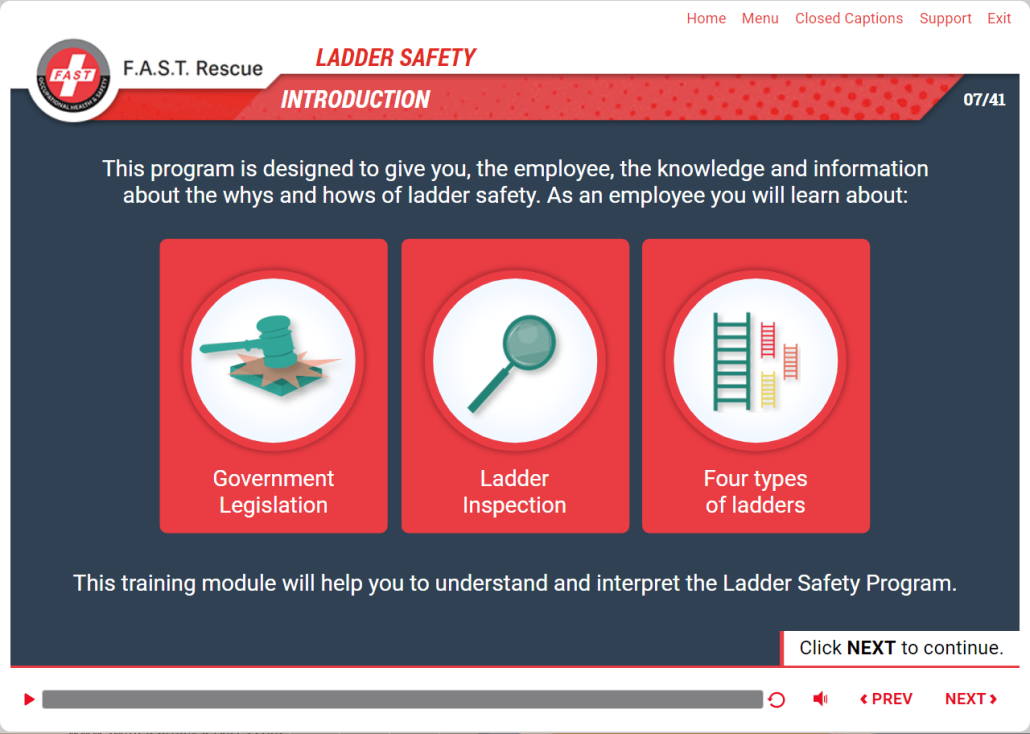
This training module will help you to understand and interpret the Ladder Safety Program.

This program is designed to give you the knowledge and information about the whys and hows of ladder safety. As an employee you will learn about government legislation, ladder inspection and four types of ladders.

The course adheres to AODA regulations and is fully narrated, providing detailed explanations of each topic, accompanied by relevant visuals and activities to ensure comprehension. A final test is administered at the conclusion of the course to evaluate your understanding.

Moreover, the course can be paused at any time, and it will automatically save your progress, allowing you to resume from where you left off. Additionally, each module culminates in a multiple-choice question (MCQ) test.

$55.37 / BUY NOW

LADDER SAFETY TRAINING COURSE OUTLINE

The course covers the following topics:

  • 1. Introduction

    This introductory chapter provides employees with information on the proper use of equipment in the workplace. Also, this chapter suggests to report damaged or defective equipment immediately to management to avoid further damage or harm.

  • 2. Ladder safety Legislation

    Ladder safety legislation refers to the set of rules, regulations, and standards established by government bodies or occupational health and safety agencies to ensure the safe use of ladders in various settings. This chapter discusses industrial establishment regulations and provides brief information on how permanent and portable ladders should be constructed.

  • 3. Ladder safety Inspections

    Ladder safety inspections are a crucial component of maintaining a secure work environment and preventing accidents related to ladder use. Ladders must be inspected for defects before and after use. In this chapter, you will learn about ladder inspection and what are the things that need to be taken into consideration while inspecting ladders.

    Damaged ladders should be removed from the work area and tagged for repair or replacement, as soon as possible.

    When inspecting the ladders, look for:

    1. Missing or loose steps or rungs
    2. Damaged or worn non­slip feet
    3. Loose nails
    4. Screws
    5. Bolts or nuts
    6. Loose or faulty spreaders
    7. Locks
    8. Other metal parts in poor condition.

  • 4. Ladder Types

    Ladders come in various types, each designed for specific tasks and settings. Understanding the different ladder types is crucial for choosing the right tool for the job and ensuring safety. There are four main types of ladders that you could have in your business. All types should have non­slip resistant feet and should always be placed on a firm surface. This chapter covers different types of ladders, i.e., portable ladders, step ladders, extension ladders, and fixed access ladders.

    The information presented is brief, concise, and accurate, using the right dose of relevant images to provide learners with clarity on each type of ladder.

    For example, here are some step ladder safety measures:

    1. Ladder should be 1 meter (3 feet) shorter than the highest point you have to reach
    2. Open the stepladder spreaders and shelf fully and lock them in place
    3. Check stability. Ensure the ladder feet are on a firm level.
    4. Place the stepladder at a right angle to the work with either the front or back of the steps facing the work.

    Safety guidelines for portable ladders include:

    1. Attach a ladder stay across the back of a ladder where a surface cannot stand the load. Extend the stay across a window for firm support against the building walls or window frame.
    2. Guard or fence off the area around a ladder erected in an area where persons have access.

  • 5. ladders Safety Tips

    Using ladders safely is important to prevent accidents and injuries. In this chapter, you will learn about the safety tips while using ladders. The information is presented in the bullet points precisely along with relevant images.

    Some of the safety tips include:

    1. Maintain three-point contact by keeping two hands and one foot or two feet and one hand on a ladder at all times
    2. Face ladder and use both hands to grip the rungs firmly
    3. Wear footwear that is in good condition and has a heel
    4. Clean muddy or slippery boot soles before mounting ladder
    5. Avoid climbing with wet soles
    6. Raise or lower tools and materials using a hardlines.
    7. Hands should be free of tools or materials while climbing
    8. Carry small tools in a tool pouch

  • 6. Final Test

    Lastly, at the end of the module, there is a final test in the form of multiple choice questions (MCQs) or choose the correct answer. After going through the module, learners’ have to attempt the final test in order to successfully complete the training.

    Summary

    The module ‘Ladder Safety Training’ focuses on providing required knowledge, awareness, and safety tips on using ladders at the workplace. In this module, an introduction is given followed by legislation and inspection points.

    The different types of ladder have been described in different chapters along with relevant images and precise text.

    The module is fully comprehensive and informative to the best of learners’ understanding. By the end of the module ‘Ladder Safety Training’, you will be able to understand how to use different types of ladders safely at the workplace.

WHAT YOU WILL GET

  • $55.37/person

  • Course Duration 30 minutes approximately

  • You can make as many attempts as you need to pass the exam; there is no limit

  • Your certificate is valid for 3 years from the date of issue

  • Phone, email and chat on weekdays from 8am – 5pm EST

  • SELF-PACED/ELEARNING

  • RECORD OF TRAINING

  • USER MANAGEMENT

  • INSTANT ACCESS

  • MOBILE FRIENDLY

  • CERTIFICATE

CONTACT US

3 + 1 = ?

OHS – LADDER SAFETY FOR WORKPLACE AND HOME SAFETY COURSE CERTIFICATE

Once you complete the OHS – Ladder Safety eLearning Training Course, you will receive a certificate of completion.

$55.37 / BUY NOW

Frequently Asked Questions (FAQs)

Ladder safety refers to the set of guidelines and practices aimed at preventing accidents and injuries while using ladders.

1. The importance of following proper ladder safety measures cannot be overstated.
2. Ensuring stability and balance while on a ladder is crucial for personal safety.
3. Regular inspection and maintenance of ladders contribute significantly to overall safety.

Ladder safety is a shared responsibility that involves employers, employees, and individuals using the ladder.

1. Employers must provide training on ladder safety and ensure the availability of suitable ladders.
2. Employees are responsible for using ladders according to the provided training and guidelines.
3. Individuals using ladders at home should also adhere to safety standards for personal well-being.

1. Store ladders in a dry and cool environment to prevent corrosion and damage.
2. Avoid leaning ladders against surfaces that may cause warping or bending.
3. Use designated storage racks or brackets to keep ladders in a secure and upright position.

The Occupational Health and Safety (OHS) provides guidelines and regulations to promote workplace safety, including specific recommendations for ladder use.

1. OHS guidelines are designed to prevent accidents and injuries related to ladder use.
2. Compliance with OHS standards demonstrates a commitment to workplace safety.
3.Failure to follow OHS guidelines may result in fines and legal repercussions for employers.

Maintaining proper ladder safety is essential to prevent accidents, injuries, and even fatalities.

1. Accidents resulting from poor ladder safety can lead to severe injuries or fatalities.
2. Proper ladder safety practices contribute to a safer work environment.
3. Reducing the risk of falls from ladders enhances overall workplace productivity.

Regular inspection of ladders is paramount to identify any potential issues that may compromise safety during use.

1. Check for any visible damage, such as cracks, bent rungs, or missing parts.
2. Inspect the ladder’s feet and ensure they are in good condition for proper traction.
3. Verify that all locking mechanisms, hinges, and spreaders are functioning correctly.

Selecting the appropriate location for setting up a ladder is crucial for ensuring safety and stability during use.

1. Choose a level surface for ladder placement to prevent instability.
2. Ensure the ladder is positioned away from doorways, high traffic areas, and electrical sources.
3. Use non-slip materials under the ladder feet for added stability.

Choosing the right ladder for a specific work is important for ensuring safety and efficiency. Consider factors such as:

1. Determine the height requirements for the task to select an appropriate ladder size.
2. Match the ladder type to the specific job, whether it’s a step ladder, extension ladder, or platform ladder.
3. Take into account the material of the ladder, considering factors such as weight capacity and durability.

1. Contact your employer’s maintenance department for workplace ladders.
2. If using a personal ladder at home, reach out to the manufacturer for guidance.

Using ladders near electrical sources requires additional precautions to prevent electrical shocks and other hazards.

1. Maintain a safe distance from power lines and electrical equipment.
2. Use non-conductive ladders, such as fiberglass, when working near electricity.
3. Inspect the ladder for any damage before use to ensure it is safe for electrical work.

Custom eLearning solutions are tailor-made educational courses designed to meet the specific needs of an organization. Investing in a custom eLearning solution offers several advantages:

1. Tailored Content: Custom eLearning solutions allow organizations to create content that is specifically aligned with their unique goals and requirements.
2. Engagement and Interactivity: These custom eLearning solutions often incorporate interactive elements, such as quizzes, simulations, and multimedia, enhancing learner engagement.
3. Scalability and Flexibility: Custom eLearning solutions can be easily scaled to accommodate the growth of an organization, providing flexibility in adapting to evolving training needs.

Yes, organizations can benefit from our custom eLearning solutions, providing the flexibility to tailor the Ladder Safety eLearning course to meet their specific training needs. By leveraging our services, they can seamlessly align the content with their unique requirements, ensuring a highly customized and effective training solution for their workforce.

Please feel free to contact us for group enrollments in our courses! You can email us at [email protected].

$55.37 / BUY NOW GET A QUOTE FOR TEAM